
You've found a lower premium, but the new insurer still needs to review your medical history. Your current policy is approaching renewal, and you're unsure whether to cancel now or wait for a decision. In Spain, the safest way to switch private health insurance is to treat it as a renewal-to-renewal transition. Compare the cover carefully, confirm the new insurer's acceptance in writing, and don't end your existing policy until the replacement start date is secure.
Table of Contents
- Why Your Renewal Date Runs the Whole Switch
- Building Your Line-by-Line Comparison
- Cancelling the Old Policy the Right Way
- Waiting Periods and Continuity of Cover
- Handling Pre-existing Conditions Without Drama
- A Visa-Safe Switching Timeline
- Your Next Steps and Decision Rule
Why Your Renewal Date Runs the Whole Switch
Start with the exact expiry or renewal date shown in your current policy schedule. That date anchors everything: the deadline for giving notice, the time available for the new insurer's medical review, and the day replacement cover should begin. A quotation can help you compare options, but it doesn't guarantee that the insurer will accept your application on the terms you expect.
Under Article 22 of Spain's Insurance Contract Act, a policyholder generally must give written notice of non-renewal at least one month before the policy expires. An insurer generally must give at least two months' notice if it intends to oppose renewal or change contractual terms. Check your policy documents and confirm the applicable dates with the insurer, rather than estimating from a payment date or assuming every policy renews on the same schedule.
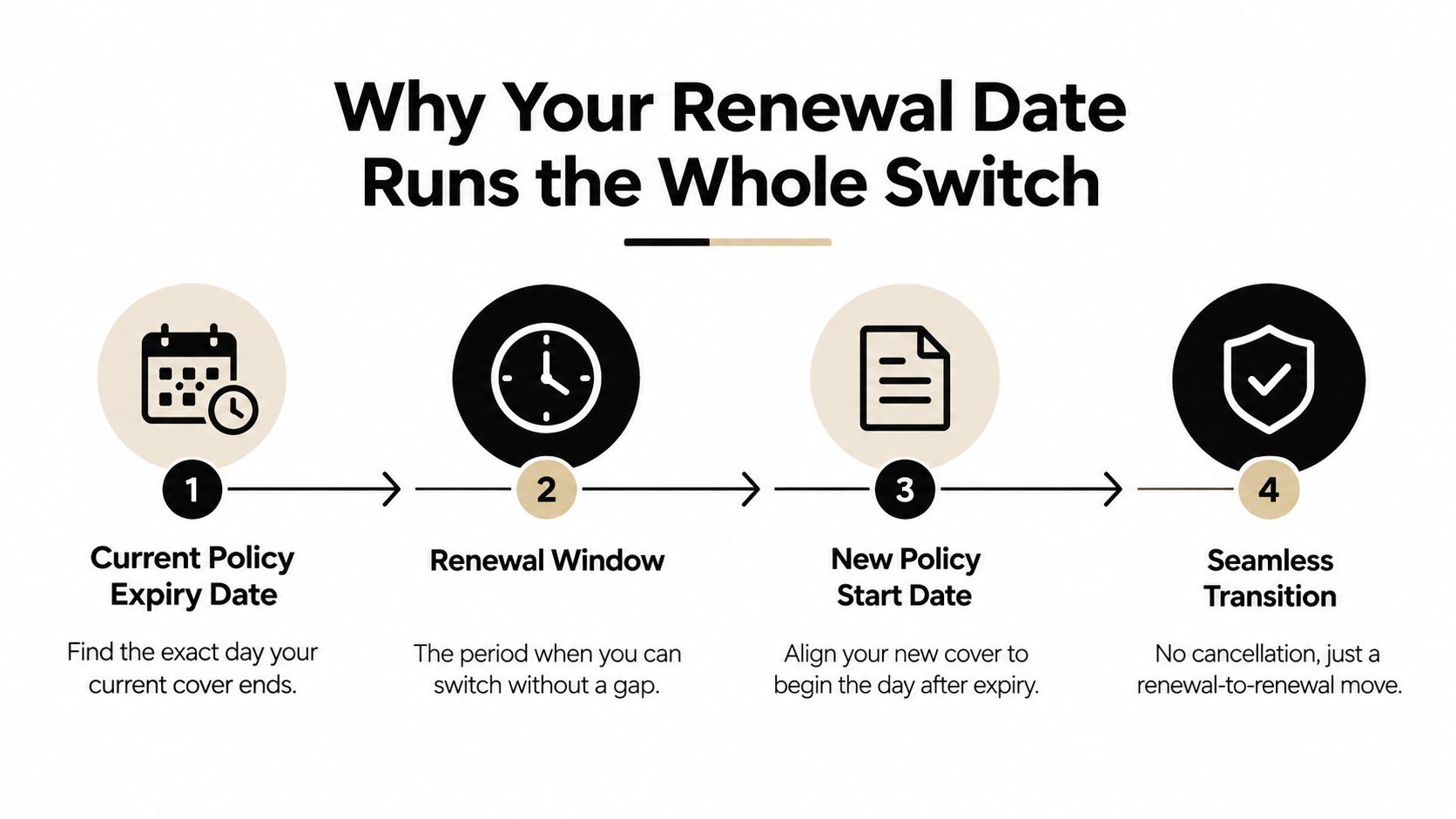
Use this sequence to protect the transition:
- Find the renewal date. Ask your insurer to confirm the policy expiry date in writing if it isn't clear.
- Open the comparison early. Request full terms from alternatives, including underwriting decisions and the proposed effective date.
- Align start and end dates. Confirm that the new cover begins as the old cover ends, with no uninsured interval.
- Send notice only when ready. Don't cancel based on a price quote or a verbal assurance.
The mistake that causes the most avoidable stress is cancelling first and applying second. Medical underwriting can lead to exclusions, a surcharge, or a refusal, leaving you without the replacement cover you expected. A careful adviser won't recommend ending the existing policy until the new insurer has issued definitive written acceptance.
If you're also trying to understand when an enrollment period applies in another insurance context, this overview can help you find your health insurance enrollment window. For a Spanish private policy, though, your policy's renewal date and notice terms are the practical starting point.
Building Your Line-by-Line Comparison
A premium comparison is useful only after you know what each plan covers. Put the current policy beside the proposed one and compare benefits by module. For each, record the limit or cost-sharing rule, network access, referral requirements, any waiting period, and whether the insurer has confirmed the term in writing.
| Benefit module | What to check in the proposed policy |
|---|---|
| Outpatient consultations and diagnostics | Specialist access, referral rules, and any copayments |
| High-technology tests | Whether the test is included and under what authorisation conditions |
| Hospitalisation and surgery | Hospital list, authorisation process, and applicable exclusions |
| Maternity and bariatric treatment | Waiting-period rules and any separate eligibility conditions |
| Mental-health services | Covered services, provider access, and limits |
| Oncology pathways | Access to specialists, treatment coordination, and relevant exclusions |
| Reimbursement claims | Reimbursement terms, documentation, and waiting-period treatment |
Don't rely on a general label. Ask the insurer to identify the exact benefit wording and, where relevant, any copayment ceiling, annual limit, referral requirement, or prior authorisation condition. A plan may look similar on a summary sheet while offering a narrower hospital network or different access to specialists.
Then test the network against your real care. List the hospitals, clinics, and specialists you use, and ask the insurer to confirm that each is in the active network for your proposed start date. A name in a general directory isn't enough if the provider's participation can change or the relevant service isn't covered at that location.
For serious ongoing conditions, compare disease-management access and exclusions before focusing on price. A lower premium can represent poorer value if it leaves a treatment pathway uncovered or restricts access to a clinician you rely on. To structure the exercise, use this guide to comparing health insurance plans. You can also audit recurring charges with FloosYo as part of a broader household budget review, but keep insurance decisions tied to the actual policy terms.
Cancelling the Old Policy the Right Way
Cancellation is a paperwork task with real consequences. Submit your non-renewal notice through a channel that leaves evidence, such as a traceable email process or registered mail. Keep a copy of the notice and the delivery confirmation, and ask the insurer to acknowledge the policy's end date.
The safe sequence is to complete the replacement application first. Request the full underwriting terms, then check the insurer's written decision for the premium, exclusions, network, waiting-period treatment, and effective date. Only after the new insurer confirms acceptance and you've verified the dates should you send the old insurer a non-renewal notice.
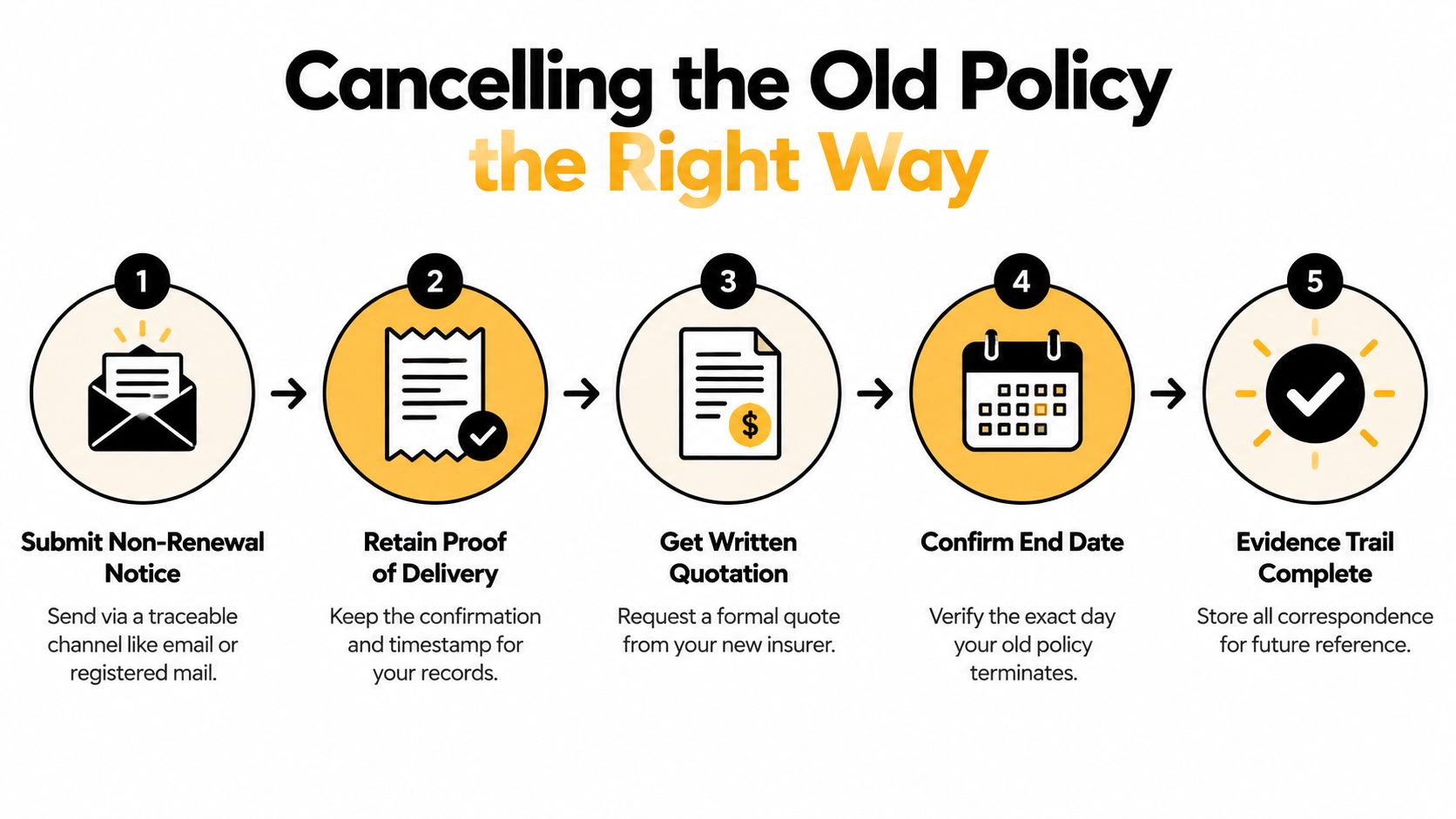
Practical rule: A quotation is not acceptance. Treat the switch as unconfirmed until the insurer has completed underwriting and issued its decision in writing.
This distinction matters most when an application includes medical history. The insurer may add exclusions or a surcharge, or decline cover after reviewing the application. Direct applicants can also be refused, so don't assume that submitting forms or paying an initial amount guarantees the policy will proceed on the terms you requested.
Before notice goes out, run through this final check:
- Acceptance: Do you have written confirmation that the new insurer will cover you?
- Terms: Are the exclusions, premium, and relevant benefit conditions clear?
- Dates: Is the new effective date confirmed, and does it avoid a gap?
- Evidence: Have you kept the non-renewal notice and proof of delivery?
Article 22's notice periods make an early start important. If you miss the policyholder's notice deadline, the policy may renew under its terms, so don't leave date-checking until the last moment. If anything is unclear, get the insurer's explanation in writing before you act.
Waiting Periods and Continuity of Cover
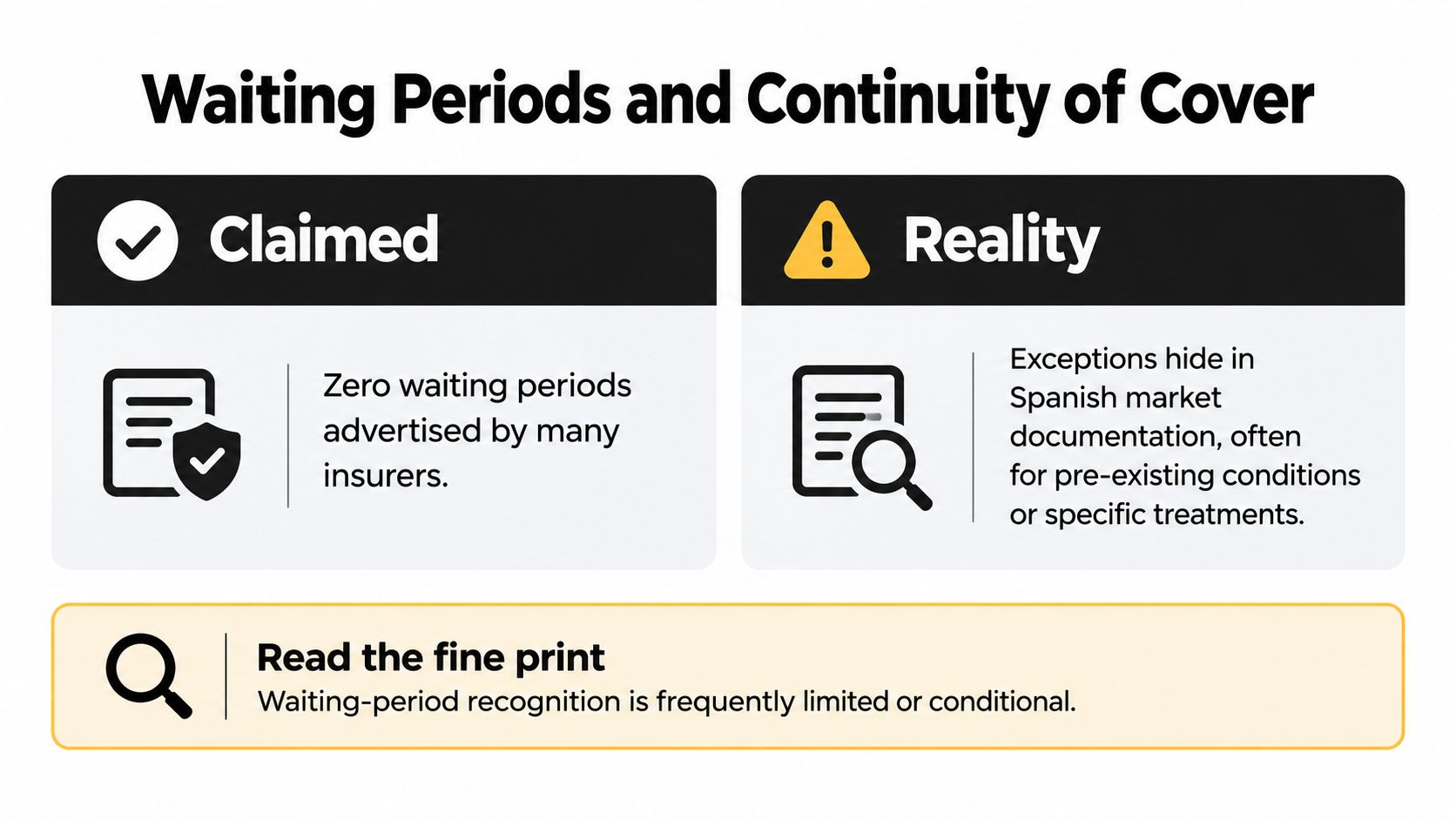
“Waiting periods waived” sounds simple, but the waiver may not apply to every benefit. Recognition of previous insurance can be limited to network or “own-provision” benefits. A reimbursement policy that lets you choose your own doctor may keep its own waiting periods, while childbirth or bariatric-surgery waiting periods may still apply even when some prior cover is recognised.
Map continuity benefit by benefit. For each module, write down how long you've held uninterrupted cover, what the new insurer says it will recognise, what proof it requires, and whether any gap is allowed. Ask for the answer in writing, not just a general statement that your history will be taken into account.
| Benefit | Questions to ask |
|---|---|
| Hospital and surgery | Which waiting periods are waived, and what documents prove prior cover? |
| Maternity | Does a waiting period still apply despite recognised insurance history? |
| Bariatric treatment | Is this benefit treated separately from general hospital cover? |
| Reimbursement | Does free choice of doctor change whether waiting periods carry over? |
| Existing care | Are current specialists and hospitals available under the new policy? |
Provider continuity needs its own check. Confirm that your current hospital, specialist, and referral route are listed in the new plan's active network for the date cover begins. A directory can be generic or out of date, so ask the insurer to verify the specific provider and service.
For serious pre-existing conditions, the result may be an exclusion or refusal rather than a simple premium adjustment. That changes the comparison: weigh the premium against uncovered treatment exposure, network restrictions, and waiting periods that may restart. This overview of health insurance waiting periods can help you prepare questions, but the proposed insurer's written terms determine what applies to your application.
Handling Pre-existing Conditions Without Drama
Medical underwriting is a decision point, not a reason to guess at the outcome. Prepare a clear account of your condition and current care, then ask the insurer what documentation it needs. That may include relevant medical reports, treatment history, or details of current medication. Don't omit information to make an application seem easier; incomplete answers can create problems when you need to rely on the policy.
Consider a retiree with a cardiac history who wants to move to a cheaper plan. The important question isn't only whether the insurer accepts the application. It's whether the written terms exclude related treatment, preserve access to the cardiologist and hospital, or impose conditions that undermine the apparent saving. If the insurer hasn't confirmed those points, the old policy remains the safer position while the applicant seeks clarity.

A family application can be more complicated. One member's medical review may take longer or produce different terms, even if the rest of the household is accepted. Don't assume the whole family can move together on the same date until the insurer has confirmed each person's acceptance and effective cover.
For a working-age applicant managing diabetes, compare the actual disease-management access and exclusions, not just the premium. The insurer's decision may not match expectations, so ask for the terms that apply to ongoing care before you decide whether the switch is worthwhile.
A useful conversation starts with the care you need, not the answer you hope to hear.
If a private application stalls, ask an informed adviser about alternatives before cancelling existing cover. Some residents may also consider the Convenio Especial, a public-health access arrangement described for eligible residents after the first year of residency. Check current eligibility and conditions directly with the relevant authority; it isn't a replacement private policy, and it won't automatically meet every visa-related insurance requirement.
A Visa-Safe Switching Timeline
A switch that works financially can still create an immigration problem if the new policy doesn't meet the requirements for your visa or renewal. Guidance for non-EU residents commonly describes visa-related cover as requiring full cover from day one, no copayments, and no waiting periods, but the exact requirements can vary by visa category and consulate. Confirm the rules that apply to your application rather than relying on a generic policy description.
Build the visa check into the switch before you give notice:
- Check the immigration deadline. Identify when you need valid insurance evidence and what the relevant authority requires.
- Ask for the certificate wording. Confirm that it describes the cover and conditions required for your visa category.
- Complete underwriting before cancelling. Wait for the insurer's final decision, not just a quote or application receipt.
- Verify the effective date. Make sure the new policy starts when you need it and that the certificate reflects that date.
- Keep the evidence. Save the certificate, acceptance, policy schedule, and proof of non-renewal delivery.
For a household, check each member's status separately. One person's medical review can delay the family's proposed switch, so don't let a faster approval for other members create pressure to end the old policies prematurely. Retirees and applicants with significant medical histories should allow for the possibility that underwriting or certificate wording needs clarification.
If you're a British expat, review these Spanish visa health insurance requirements for British expats alongside guidance specific to your visa route. The practical test is straightforward: don't cancel until the replacement insurer has confirmed acceptance, the new start date is secure, and you have the documentation you need for immigration purposes.
Your Next Steps and Decision Rule
Judge the switch by risk-adjusted total value, not the advertised saving alone. That means weighing the premium against uncovered treatment, restricted provider access, exclusions, and waiting periods that may remain or restart. A cheaper policy can be the wrong choice if it disrupts care or fails a visa requirement.
Before you decide, make sure you can answer these questions:
- What's the exact renewal date? Check the policy schedule and confirm the notice deadline.
- What changes under the new plan? Compare benefits, network access, underwriting terms, and continuity rules line by line.
- Is acceptance final? Get the exclusions, premium, and effective date in writing.
- Is the switch compliant? If a visa or residence application is involved, verify the certificate wording and required cover.
- Can you prove notice was delivered? Keep the submission and receipt.
Consider professional help if you have a serious pre-existing condition, mixed underwriting within a family, an approaching visa renewal, or a reason to switch outside the ordinary renewal process. An adviser can help you compare the written terms and coordinate paperwork, but you should still read the acceptance and confirm that it matches your needs before ending existing cover.
Bsure Health Brokers compares private policies and can coordinate underwriting and switching paperwork before the current policy is cancelled. If you want support checking network access, continuity terms, or visa-related cover, contact Bsure Health Brokers to discuss your circumstances.