
You've just landed in Spain, or you're planning the move, and the insurance decision is already sitting on your desk like a test you didn't revise for. One policy says cuadro médico, another says reembolso, a third mentions carencias, and somewhere in the paperwork your visa, NIE, or residency file is waiting for the right answer. I've seen this exact moment in Marbella more times than I can count, usually from people who are perfectly capable of managing a move abroad, but don't want to make a mistake with health cover that could affect their stay in Spain.
The good news is that the decision gets much easier once you stop shopping by headline price and start shopping by use case. Private health insurance in Spain isn't one generic product, it's a mix of access, exclusions, billing style, and legal suitability. Buyers often care about peace of mind, access speed, and practical protection more than extras alone, which fits the broader pattern seen in survey and consumer research on why people buy cover in the first place Melbourne Institute survey on private health insurance motivations, Finder UK private healthcare statistics.
Table of Contents
- Your Starting Point Navigating the Spanish Healthcare Maze
- Assess Your Core Needs and Legal Requirements
- Decoding Spanish Health Insurance Plan Features
- Navigating Pre-Existing Conditions and Retiree Coverage
- Evaluating Insurers and Making the Switch
- Your Final Step Using a Broker and an Actionable Checklist
Your Starting Point Navigating the Spanish Healthcare Maze
A client once sat across from me in Marbella with three quotes open on a laptop, convinced the cheapest one had to be the safest choice because it was “visa-friendly.” The problem was that the policy looked fine until the fine print showed network limits and service rules that would have made everyday use awkward. That's the classic expat mistake, treating private health insurance as a paperwork exercise instead of a real access decision.
Why the first instinct is often wrong
In Spain, the shape of the policy matters as much as the premium. A plan can look compliant on paper and still be frustrating if you need fast specialist access, a hospital near your home, or simpler billing for routine appointments. That's why the right question isn't “What is the cheapest plan?”, it's “What will work when I need care?”
Practical rule: if the policy is for a residency file, the insurer's certificate matters, but so does whether the plan can function in daily life once you've arrived.
A bit of external reading can be beneficial. If you're dealing with a diabetes-related decision, the Repose Healthcare diabetes guide is useful for understanding the practical side of ongoing condition management before you start comparing policy wording. You don't need medical jargon to see the difference between a plan that merely exists and a plan you can realistically use.
The Spanish market also rewards people who think in terms of use, not labels. Some buyers need straightforward hospital access for a visa file, some need flexibility for family care, and some just want to avoid long waits for specialists. A one-size-fits-all approach fails because the same plan can be ideal for one expat and poor value for another.
Assess Your Core Needs and Legal Requirements
Start with your life, not the brochure. If you're moving alone, bringing a spouse, covering children, or retiring to Spain, each of those situations changes what “good cover” means. A digital nomad may care most about portable access and admin simplicity, while a retiree may care more about dependable specialist routing and the policy's treatment of pre-existing issues.
Build the shortlist around real usage
Write down the care you're most likely to use in a normal year. That includes GP visits, specialist appointments, prescriptions, dental care if you want it, and whether you're likely to travel in and out of Spain. Then ask whether you want a broad network, a reimbursement style plan, or something leaner that keeps monthly outlay down.
Use this quick filter before comparing quotes:
- Family structure: single, couple, or children on the policy.
- Location: city access and hospital choice matter in Spain more than many newcomers expect.
- Travel pattern: frequent cross-border travel can change how useful a plan feels.
- Known medical needs: chronic treatment, follow-ups, or specialist appointments need a closer look at exclusions.
- Residency or visa use: the policy may need to support an application, not just your health needs.
Match the policy to the paperwork
Spain's bureaucracy can be strict, but the useful part is simple. If the policy is needed for residency or visa compliance, the insurer's certificate, coverage wording, and any exclusions that affect acceptance need to be checked before you pay. Government guidance on choosing compliant private health insurance is often broad, and it doesn't replace the practical question of whether the plan fits your provider needs and claim experience, especially when a narrow network could limit usability Australian government guidance on choosing private health insurance.
That's why the cheapest compliant option is not always the right answer. A low price can hide a network that doesn't suit where you live, or rules that make the plan clumsy once you start using it. If you're asking for a residency-safe policy, think in terms of legal acceptability, provider access, and how much friction you'll tolerate when care is needed.
Good fit means two things at once, it satisfies the formal requirement and still works for your life in Spain.
Decoding Spanish Health Insurance Plan Features
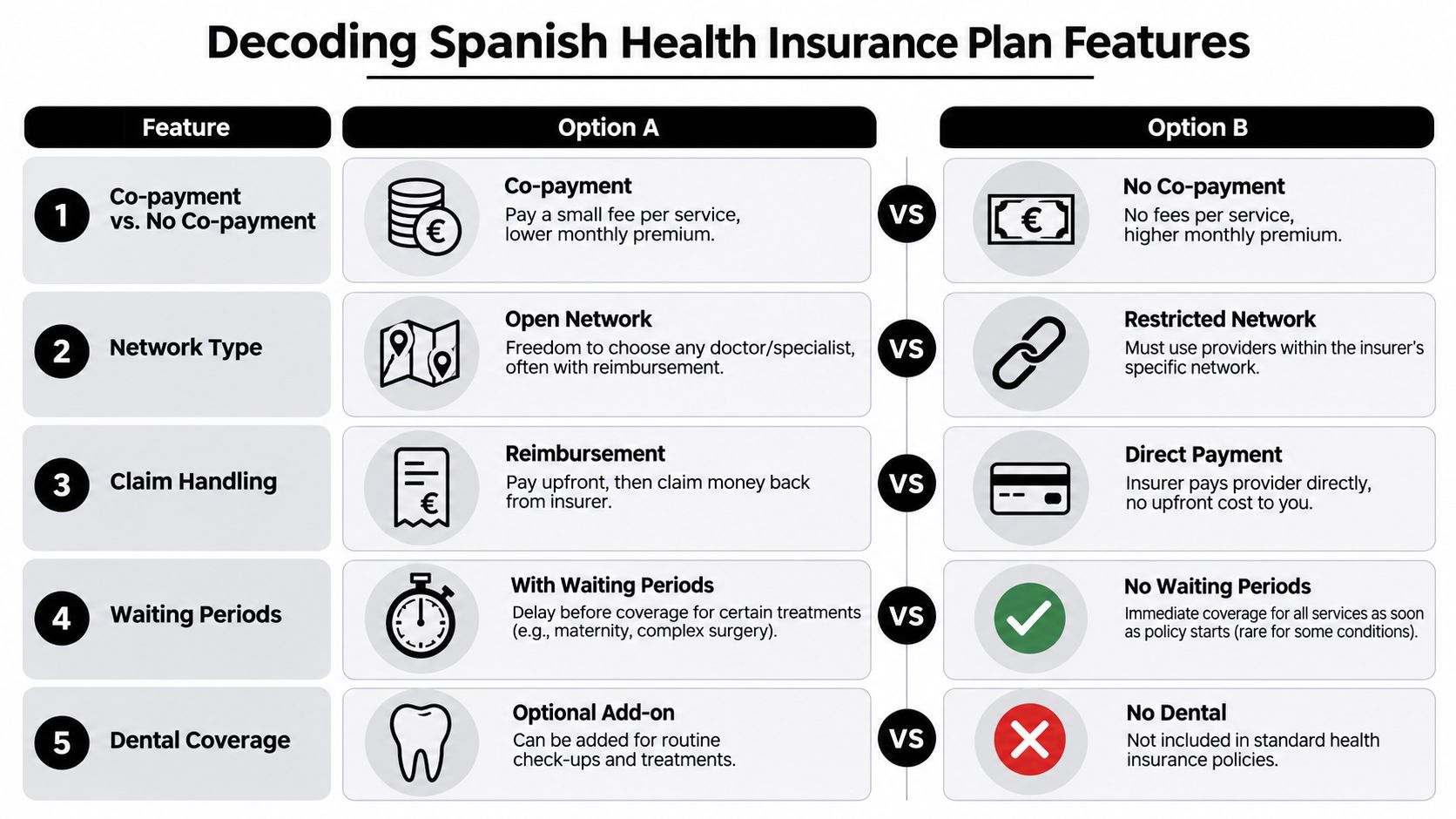
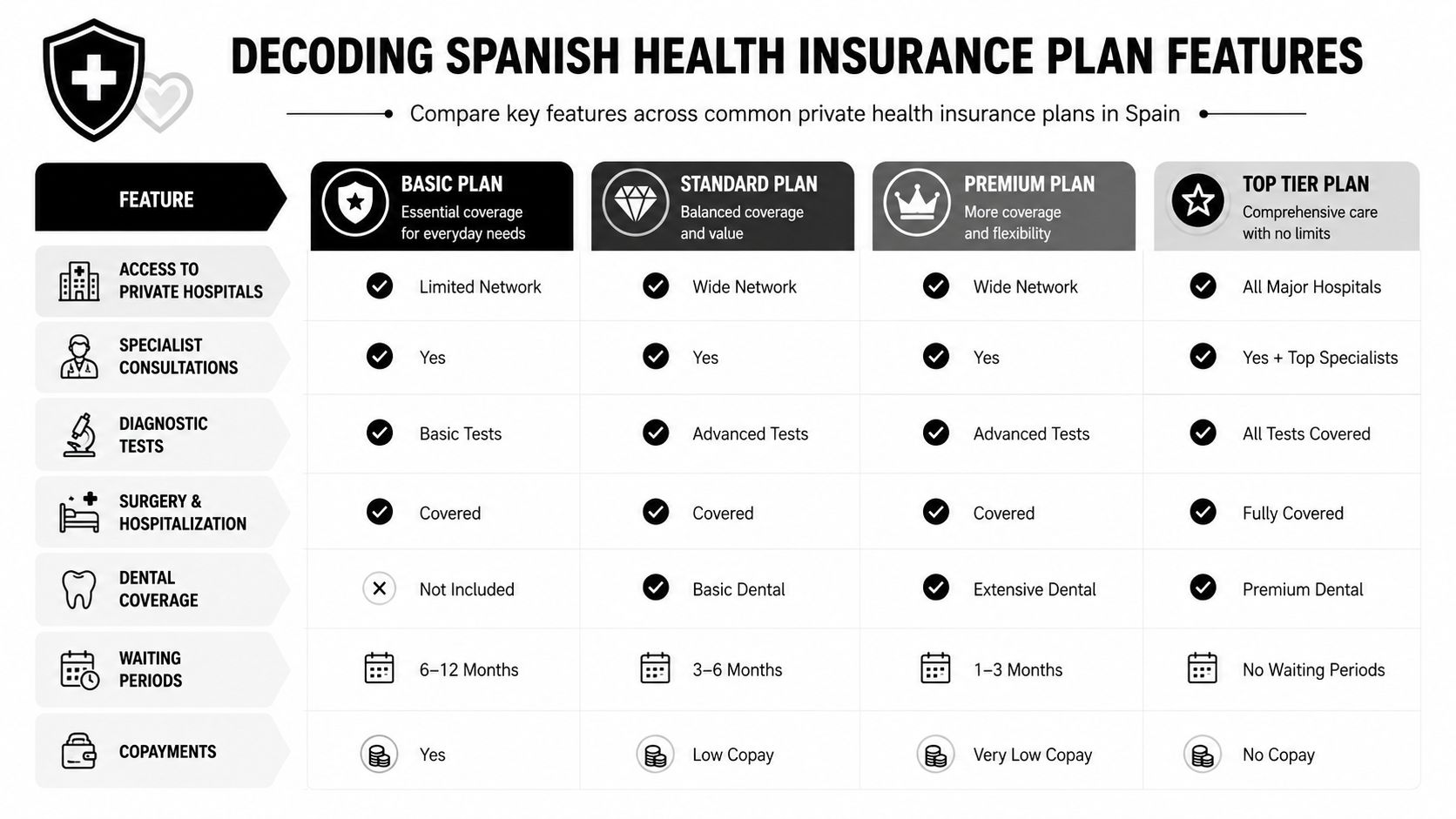
Spanish health insurance language trips people up because the words sound similar while the practical consequences are very different. Cuadro médico means a provider network, reembolso means reimbursement, co-pagos are service-level payments, and carencias are waiting periods. Those aren't just technical details, they change how fast you can get care and how much you'll pay when you use it.
Cuadro médico and reimbursement are not the same thing
A cuadro médico plan usually means you use doctors, clinics, and hospitals within the insurer's network. That can be a very clean way to get treatment because the provider relationship is already set. A reembolso plan gives you more freedom to choose providers, then claim part of the cost back, which can suit people who want flexibility or already have preferred specialists.
The trade-off is obvious once you've lived through a few medical appointments. Network plans are simpler and often easier to use day to day. Reimbursement plans can be more flexible, but they usually require better admin discipline and more patience while money moves back and forth.
Co-payments can change the whole budget
A plan with co-pagos may keep the monthly premium lower, but it adds a fee every time you use a service. That can be a good deal if you rarely need care. It can also become annoying if you're the kind of person who sees specialists regularly, takes children for repeated visits, or wants predictable costs.
This is why the right comparison is annual spend, not only the monthly price. The National Health Council's planning guidance recommends listing predictable care needs and then comparing premium, deductible, copays, and out-of-pocket maximum, because a low premium can still be the most expensive choice overall National Health Council guide to choosing an insurance plan. That logic applies well in Spain, even if the product names differ.
Waiting periods can matter more than people expect
Carencias are the delay before certain treatments become available. That matters if you're planning a procedure soon after arrival, thinking about maternity, or want access to more complex treatment without a long wait. A policy that looks generous may still leave you uncovered for key services during the early months.
The cleanest approach is to treat each benefit separately. Don't ask whether the plan is “good”. Ask whether the network, copay structure, claim method, and waiting periods line up with the care you expect to use.
Navigating Pre-Existing Conditions and Retiree Coverage
A lot of people arrive in Spain assuming that if they can pay the premium, they can buy the policy. That's not always how underwriting works. Chronic and pre-existing conditions can change the picture fast, especially for retirees or expats who need ongoing specialist follow-up rather than one-off care.

The medical history form matters more than most people think
When insurers ask for medical information, accuracy is imperative. If you leave out a condition, simplify a treatment history, or guess at dates, you can create problems later when a claim is reviewed. Before completing forms, it helps to gather documents and answer carefully, and resources like completing your medical history accurately can remind you how important that preparation is.
For people with ongoing conditions, the goal isn't perfection, it's usability. A policy that excludes exactly the care you need may be cheap, but it isn't really protection. That's why detailed underwriting questions, written answers, and a clear picture of exclusions matter more than marketing language.
Retirees need to test the policy against real care patterns
An older expat often cares less about extras and more about whether the insurer will support specialist access without unnecessary friction. If you're comparing options for retirement in Spain, the policy has to fit a realistic pattern of use, not just a list of benefits on a website. Age, condition history, and specialist need can all influence whether a plan is worth considering.
Mainstream guidance often stops at premium comparisons, but that doesn't help someone with a chronic condition decide whether a policy is usable in practice. For that reason, a deeper check of underwriting, referral rules, and exclusions is essential, especially when you're evaluating plans for long-term residence MoneySavingExpert guidance on health insurance and pre-existing conditions.
If your case is more complex, it's also worth reviewing specialist guidance such as this pre-existing conditions resource, because broad advice rarely answers the practical questions about what's covered. The right policy for a retiree or someone with diabetes, cancer history, or heart issues is the one that still works after the underwriting is finished.
If a condition affects your everyday care, check whether the insurer will support that care in reality, not just in theory.
Evaluating Insurers and Making the Switch
Once the policy features look acceptable, the insurer itself becomes the next filter. Two plans can look similar on paper and still deliver very different day-to-day experiences because one insurer answers questions quickly and another hides behind admin. In Spain, that difference often shows up in how fast you can book, how claims are handled, and whether the provider network includes the doctors you prefer to use.
Look past the brochure and into the service model
The network matters because it decides where you can go without friction. A strong cuadro médico is not just a long list of names, it has to include hospitals and specialists that are practical from your home base. If you live in Marbella, Málaga, Madrid, or on the coast, the nearest solid clinic can matter more than a national promise you may never use.
Support matters just as much, especially if you want English-speaking help when something goes wrong. One poorly explained referral rule can turn a simple appointment into a chain of calls and delays. You do not want to discover that after treatment has already started.
Speed is often the reason people buy private cover in the first place. UK survey data shows that many buyers choose private healthcare for faster access, which makes waiting time a practical yardstick rather than a luxury feature Finder UK health insurance statistics. Use that as a benchmark when you judge whether a Spanish plan will really improve access, because a policy that looks good but leaves you waiting is poor value in real life.
Make switching clean, not rushed
If you already have a policy and want to change, do not cancel first and search later. Review the current cover, identify what is missing, and compare the new policy against those gaps. That matters especially if you are trying to avoid gaps in service or repeat waiting periods.
A good way to structure the switch is to use this plan comparison resource before you commit. Check the new policy terms, confirm the start date, verify whether any waiting periods apply, and make sure the new certificate or policy documents are ready before the old cover ends.
A clean switch protects continuity. A rushed cancellation can leave you with a valid policy and no useful access for the period you care about most.
Your Final Step Using a Broker and an Actionable Checklist
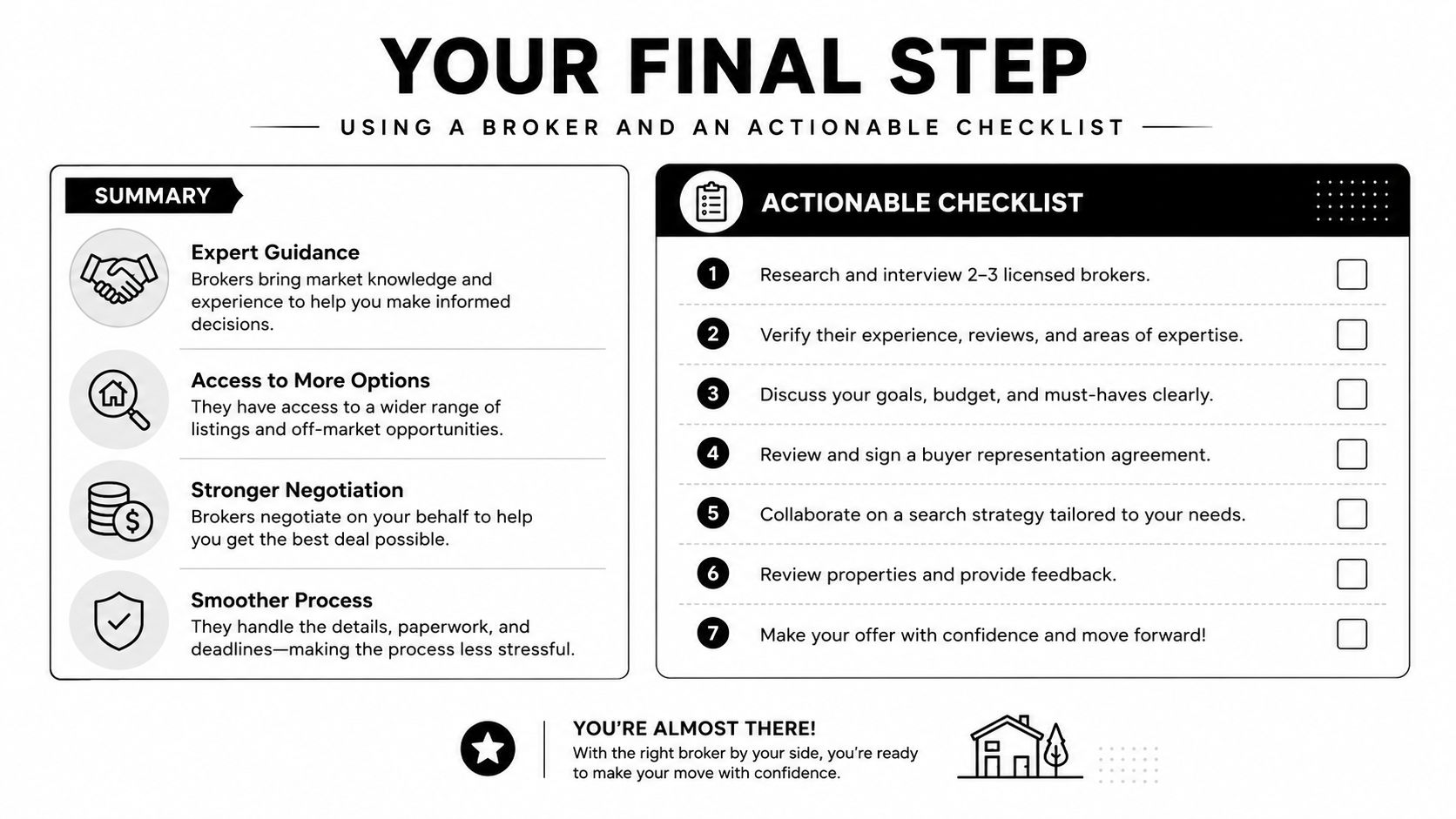
The last decision gets easier when someone who knows the market can narrow the field. A specialist broker does not replace your judgment, but a good one can filter the noise, explain whether a plan is usable, and flag issues that only become obvious after years of dealing with insurers. In Spain, where residency paperwork, network breadth, and claims friction all matter, that kind of help saves time and stress. If you want a clearer picture of the role, see what a health insurance broker does.
Why a broker earns their place in complex cases
A broker can compare insurers, translate the fine print, and spot the plans that look cheap but do not suit a particular profile. That matters most if you are a retiree, an expat with a chronic condition, or someone choosing cover for visa or residency purposes. Bsure Health Brokers is one example of a specialist brokerage that works with Spanish and international insurers and handles setup, paperwork, renewals, and support in English.
That support is useful because private insurance is not only a purchase, it is an ongoing relationship with the insurer. For many buyers, peace of mind is part of the reason they choose private cover, and that matters just as much as the policy wording when you are trying to live legally and comfortably in Spain.
Keep this checklist beside you when comparing
- Confirm the purpose: visa compliance, faster access, family cover, retirement cover, or condition management.
- Check the network: make sure the hospitals and specialists work for where you live.
- Read the exclusions: especially for chronic or pre-existing conditions.
- Compare the full spend: premium, copays, and likely usage.
- Look for waiting periods: especially if treatment timing matters.
- Test the claim process: direct payment and reimbursement are not the same.
- Verify support: English communication can make a big difference when you are unwell.
- Keep documents ready: policy certificate, medical history, and renewal dates.
Use the checklist as a filter, not a guess. If a policy fails even one of the key criteria, keep looking.
If you want a clear, human comparison of Spanish private health insurance options, speak with Bsure Health Brokers and ask them to review your visa status, hospital preferences, and any pre-existing conditions before you buy.