
You retire on a Friday and the HR portal feels oddly final. The paycheck stops, the badge stops working, and the health plan you've leaned on for years suddenly needs a replacement. If you're under 65, that gap can last until Medicare starts, so the key job is not just picking a plan, it's building the right bridge.
The good news is that how to get health insurance after retirement is usually a choice between a few predictable paths, not a scramble in the dark. COBRA, a spouse's plan, an ACA marketplace plan, retiree coverage, and Medicare add-ons each solve a different problem, and the right answer depends on specialist use, prescription fit, and income-based subsidies.
Table of Contents
- The Coverage Gap Most Retirees Don't See Coming
- Who Qualifies for What at Every Age
- Comparing the Four Main Bridge Options
- The Medicare Decision Framework That Actually Works
- Handling Pre-Existing Conditions During the Transition
- What Health Insurance Actually Costs After Retirement
- Common Pitfalls and How to Avoid Them
The Coverage Gap Most Retirees Don't See Coming
A 62-year-old leaves a corporate role on a clean handoff date and assumes the old insurance will keep running long enough to reach Medicare. In practice, that assumption often breaks. Retirement health coverage usually comes down to a bridge problem, because Medicare eligibility typically starts at 65, and the initial enrollment window begins three months before the 65th birthday, includes the birthday month, and continues for the three months after. FBL Financial Group explains the timing basics, and that timing is where a lot of retirement stress starts.
The common mistake is treating retirement coverage like a simple yes-or-no choice. It is layered. COBRA can continue employer-sponsored benefits for up to 18 months after retirement, the retiree usually pays the full premium plus a 2% administrative fee, and some families can keep dependent coverage longer under the plan rules. That same retirement insurance guide from FBL Financial Group shows why the bridge can be expensive even when it feels familiar.
Practical rule: the best bridge is the one that keeps your doctors, meds, and cash flow stable until the next enrollment window opens.
Timing matters more than the headline price. If someone retires before 65 and misses Medicare enrollment, they may need a temporary private or marketplace plan to avoid a gap. The right move is to line up the exit date, the end of employer coverage, and the next valid start date before the resignation letter is even submitted. For retirees under 65 who need a structured comparison of bridge options, this guide to health insurance for retirees under 65 is a useful starting point.
For many retirees, the pressure point is not the monthly premium alone. It is the fear of losing access to treatment in the middle of a transition. That concern is reasonable. A strong bridge plan protects continuity first, then cost, then convenience.
Who Qualifies for What at Every Age
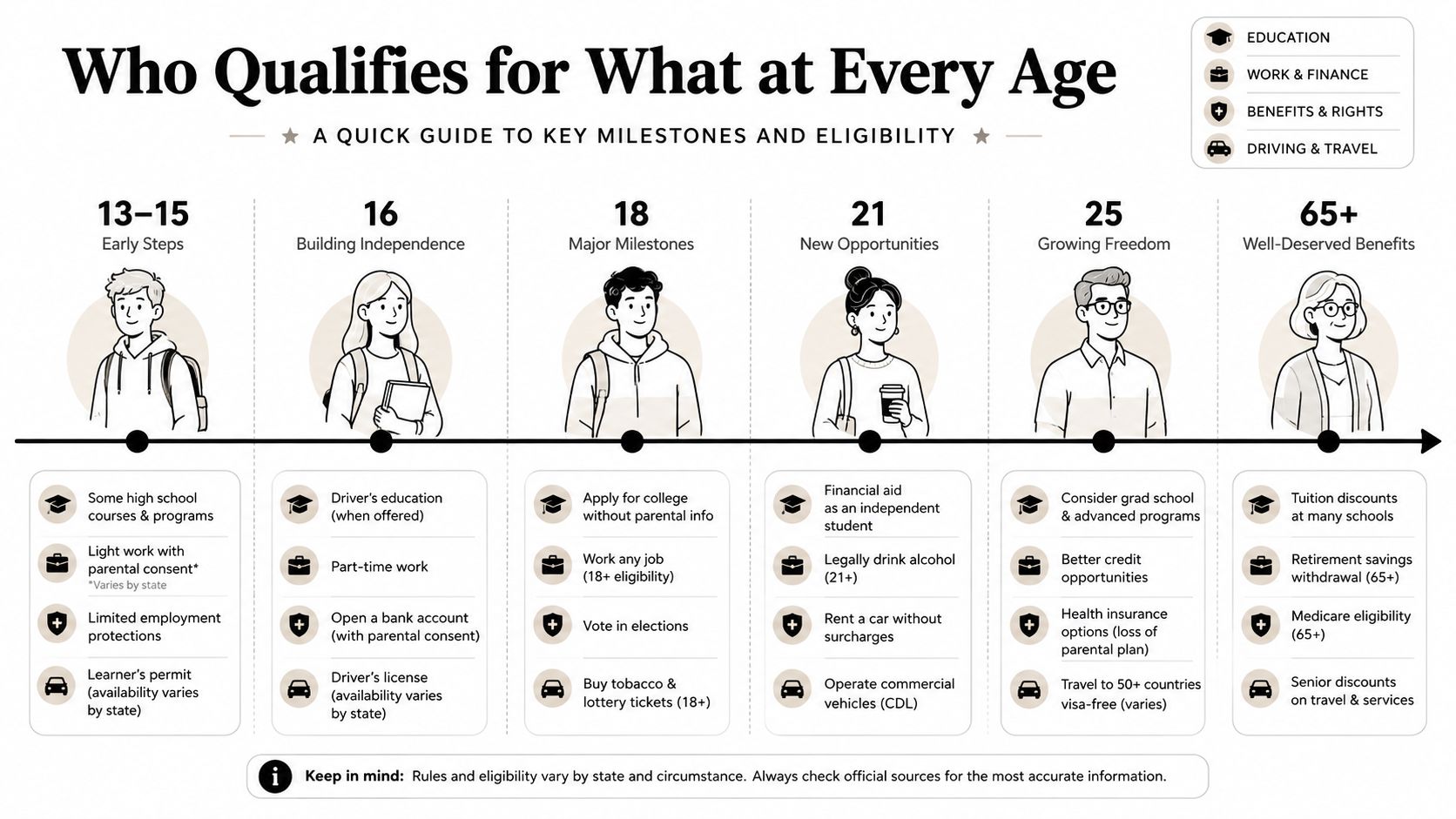
Eligibility changes with age, employer size, household structure, and where you live. For a retiree trying to avoid a gap in coverage, the first question is not which option looks cheapest. It is which options are available right now, and which ones fit the doctors, prescriptions, and income situation you have today.
The age and employer rules that matter
Medicare becomes the default backbone at 65, and the enrollment window is fixed around that birthday. If retirement happens before then, COBRA is one of the most common bridges, and it can continue employer coverage for up to 18 months. The Federal Employees Benefits page for retirees points out that early retirees often also need to consider a spouse's plan or a marketplace plan once employer coverage ends.
The employer-size rule is easy to miss. In smaller firms, retirement can leave room to move into the individual market right away, while larger employers often make COBRA the more direct short-term bridge because it keeps the same group plan structure. That difference matters because the plan you leave, not just your age, often determines whether your transition is simple or awkward.
Residency and non-U.S. planning
For expats and people retiring abroad, residency and visa status can determine whether national, international, or private plans apply. That part is country-specific, so the safer move is to confirm local eligibility before assuming a U.S. retirement bridge will work overseas. A practical reference for that kind of move is health insurance for retirees under 65, because it shows how private coverage rules change once you are living outside the U.S.
Do this early: confirm your end date with HR, then confirm whether your next option depends on age, residency, or employer size. Those three variables decide most retirement transitions.
The main takeaway is simple. Retirement health eligibility is layered, not binary. If you sort age, employer status, and residency first, the rest of the decision gets much easier.
Comparing the Four Main Bridge Options
A retiree leaving employer coverage usually has four practical bridges to compare, COBRA, a spouse's employer plan, an ACA marketplace plan, or retiree group coverage. The better fit depends on network continuity, drug access, specialist use, and how much room there is for income-based help.
A simple side-by-side view helps before anyone signs anything.
| Bridge Coverage Options at a Glance | Typical Cost Burden | Network Continuity | Specialist Fit | Drug Access | Subsidy Eligibility | Best For |
|---|---|---|---|---|---|---|
| COBRA | Usually highest, because the retiree pays the full premium plus the administrative fee | Strong, because it keeps the prior employer plan | Often strongest when a retiree already has doctors in place | Usually familiar if the old plan already covered the medication | No marketplace subsidy | People in active treatment who cannot afford a provider change |
| Spouse's employer plan | Often lower than COBRA if the spouse's employer subsidizes coverage | Depends on the spouse's plan network | Can work well if the spouse's plan includes current specialists | Depends on the spouse's formulary and pharmacy rules | Not a marketplace subsidy, but employer rules may help | Couples who can join an active worker's plan |
| ACA marketplace plan | Can be more affordable than COBRA, depending on income | Varies by insurer and region | Useful if the local network includes the right specialists | Can be a better fit if another insurer covers a needed drug more cleanly | Possible, because subsidies are income-based | Retirees with lower taxable income who want fresh plan choices |
| Retiree group coverage | Varies widely by former employer | Usually stable if the plan stays in force | Often easier for retirees whose doctors already take the plan | Usually predictable if the retiree group plan is still active | Usually not subsidy-based | Retirees whose former employer still offers group coverage |
COBRA is the most familiar bridge, and that familiarity can matter. It keeps the old plan structure in place, so a retiree who is already mid-treatment may avoid the disruption that comes with a new network, new referrals, or a new pharmacy setup. The trade-off is price. Many retirees pay far more than they expected because they now cover the full premium themselves. For a broader view of how retiree coverage fits into the overall transition, the retiree coverage guidance at Healthcare.gov is a useful reference point.
The spouse's employer plan can be the cleaner choice when the household still has an active worker. It often costs less than COBRA, but only if the spouse's plan treats the retiree well on doctors, drugs, and referral rules. Some couples save money and lose convenience, others get the opposite result. The question is whether the plan includes the doctors and medications that matter now, not whether it sounds simpler on paper.
ACA marketplace plans serve a different purpose. They are often the best comparison point when income is lower, because subsidy eligibility can make a fresh plan less expensive than continuing employer-style coverage. The network is not automatic, though. A retiree who needs a specific specialist or a narrow drug formulary still has to check each insurer carefully. The marketplace works best when the retiree wants a new plan design and can benefit from income-based pricing.
Retiree group coverage sits in a different category altogether. It is usually attractive when the former employer still subsidizes or maintains a group plan, and the main value is stability. That stability can matter if you want to keep the same care pattern without reworking the entire setup. If you are comparing plan designs for later retirement years as well, it can help to review a practical guide on over 65s health insurance so you can see how plan features shift once Medicare enters the picture. For retirees who want to compare long-term supplement choices, you can also find Medicare Supplement in Duluth GA, especially if preserving doctor choice is the main priority.
The decision usually comes down to three practical questions. Will the plan keep current specialists? Will it handle current prescriptions without surprise friction? And does the household income make a marketplace option worth serious attention? Once those are answered, the “cheapest” plan is often not the best bridge, and the “familiar” plan is often not the most efficient one either.
The Medicare Decision Framework That Actually Works
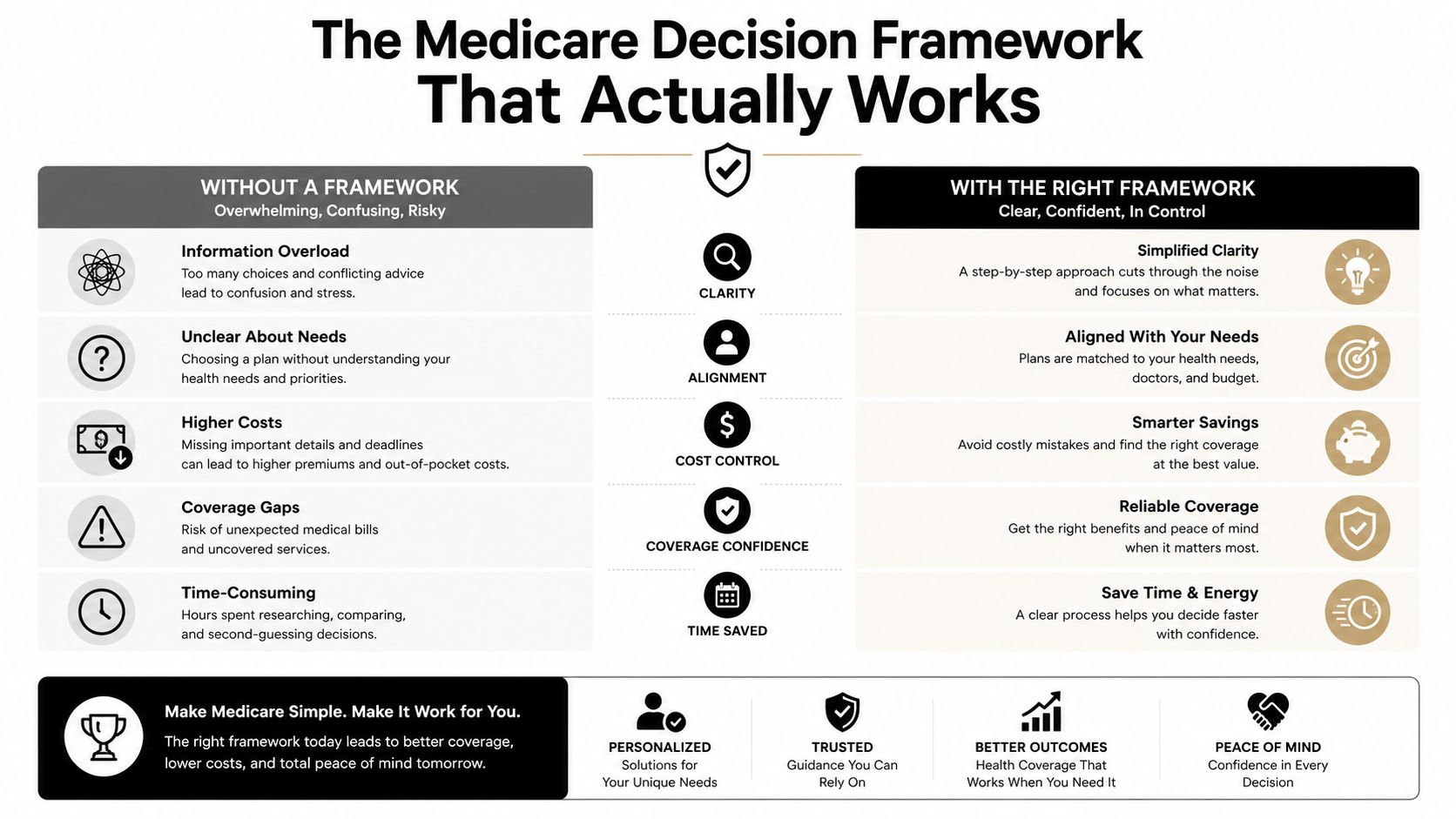
A retiree who signs up for Medicare and then realizes the plan does not fit their doctors, prescriptions, or tax situation usually ends up paying for that mistake all year. The better path is to judge the plan by how it works in daily use, not by the marketing summary. For retirees 65 and older, the practical choice is usually Original Medicare plus supplement and Part D or Medicare Advantage, and the right answer depends on the details of care, drugs, and income.
Test the plan against specialist use, drugs, and income
Start with specialist use. If you see several specialists, Original Medicare often gives you more flexibility with provider choice and fewer referral hurdles. That does not make Medicare Advantage a bad option. It means you need to confirm that your current doctors, referral process, and expected care pattern fit the plan before you enroll.
Then compare the drug formulary. A retiree who takes a stable brand-name medication can run into trouble with a plan that has a lower premium but handles that drug poorly. Check the exact medication list, the tier placement, and any prior authorization rules. The monthly price is only one part of the cost.
Income belongs in the same review. Modified Adjusted Gross Income can affect premium-related charges such as IRMAA, so a retirement distribution, business sale, or large withdrawal can change what Medicare costs. The NAIC's consumer insight on post-retirement health insurance keeps that broader cost picture in focus, because Medicare covers only part of retirement health-care spending and retirees still need to account for copays, drugs, and services that are not fully covered.
Best practice: compare plans using your actual doctor list, your actual medications, and your likely taxable income for the year ahead.
For retirees who want local help with supplement options, a resource like find Medicare Supplement in Duluth GA can be useful when you are checking how Medigap-style coverage fits a specific Medicare strategy. The important point is the method, not the location.
Medicare decisions also need a fresh review each year. Medications change, doctors change, and income changes. A new withdrawal, a pension adjustment, or a larger taxable event can shift the premium picture enough to make a different plan more practical the following year.
Handling Pre-Existing Conditions During the Transition
A pre-existing condition doesn't automatically mean a dead end. It changes the strategy, not the possibility. The three plan types retirees usually encounter handle health history very differently, and understanding that difference prevents panic.
What gets underwritten and what doesn't
ACA marketplace plans cannot deny coverage or charge more because of pre-existing conditions. COBRA is also straightforward in that respect, because it keeps the prior employer plan instead of forcing a fresh medical underwriting process. Medicare acceptance during the initial enrollment window is also not based on a new health screening.
That leaves private international or retiree-specific plans outside ACA protections, where underwriting can still matter. In those cases, a broker may be able to work with senior underwriters to secure coverage with adjusted premiums or exclusions rather than a flat denial. That's a negotiation problem, not just a shopping problem.
Build a clean file before you apply
The most useful documents are the ones that tell the story quickly:
- Medical records: recent summaries help underwriters understand stability and treatment history.
- Specialist letters: these can clarify diagnosis, treatment plans, and ongoing needs.
- Medication lists: current prescriptions matter because drug load often shapes plan suitability.
- Procedure history: recent surgeries or imaging can affect how a plan evaluates risk.
For retirees managing chronic conditions, a practical explanation of how treatment decisions affect plan selection can be valuable, especially if insulin is part of the picture. A focused resource like Master Your Diabetes insulin guide can help frame the medication side of the conversation before you compare health plans.
If you're shopping outside U.S. marketplace rules, an internal reference such as pre-existing conditions health insurance can also help you understand how conditions are treated in private-health contexts. The main lesson is consistent: don't wait for an application to ask the questions your records could answer up front.
When a condition is active, the best outcome is often not perfect coverage, it's coverage that protects access to the right doctors and the right medicines without forcing a delay in care.
What Health Insurance Actually Costs After Retirement
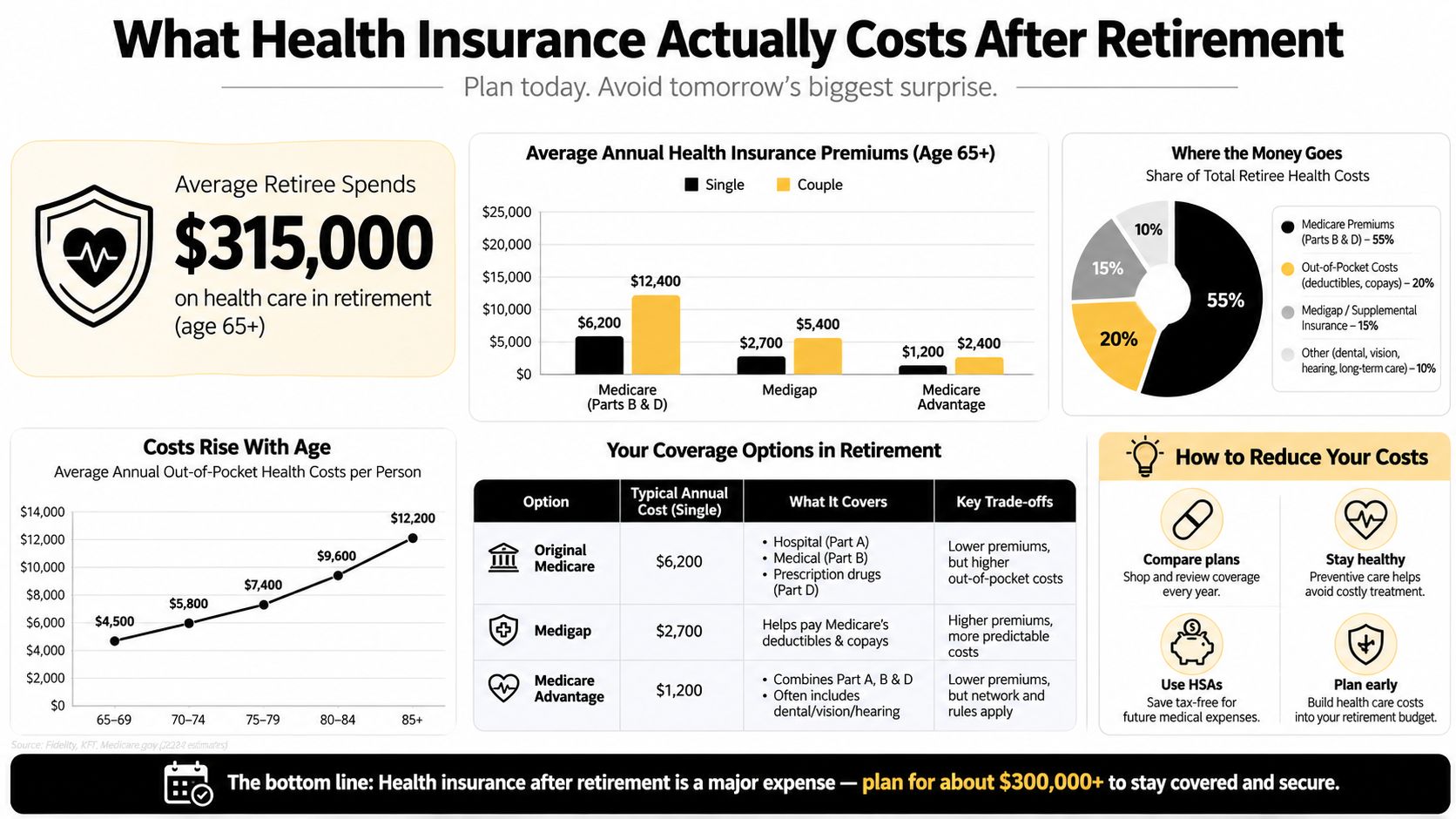
The premium is only the entry fee. The full cost of retirement health insurance also includes deductibles, copays, prescription tiers, and any charges tied to income later on. Retirees who focus only on the monthly bill often choose the plan that looks cheapest and ends up costing more over the year once care starts.
The premium is not the whole story
COBRA is the clearest example. It can keep the old plan intact, but the retiree usually pays the full premium plus the 2% administrative fee. That is a very different bill once the employer subsidy is gone, so COBRA should always be compared with marketplace and spouse-based options before anyone signs.
Original Medicare also needs to be treated as partial coverage, not complete coverage. The practical question is not whether Medicare helps, it is how much of your actual spending still lands on you after premiums, cost sharing, and uncovered services. If you have regular specialist visits or ongoing prescriptions, that gap can be large enough to change which bridge option makes sense.
A simple annual budget makes that gap visible. Start with the premium, then add expected copays for doctor visits, specialist care, and prescriptions, plus a deductible estimate if your plan has one. If a retiree expects several specialist appointments and a higher-tier drug, the lowest premium can easily stop being the lowest total cost.
Income changes can move the bill
Retirees often overlook how income flows into the health-cost picture. Withdrawals, capital gains, or a business sale can change Modified Adjusted Gross Income and affect premium-related charges such as IRMAA. That is why retirement planning and health planning need to talk to each other. A plan that looks affordable in January can become less attractive if income changes later in the year.
Budget for care, not just coverage. The monthly premium is visible. The deductible, the drug tier, and the income surcharge are where the surprise usually lives.
The cleanest way to compare options is to build a simple yearly estimate using your likely doctor visits, medication list, and expected taxable income. I usually tell retirees to price three versions of the year. One with low medical use, one with a normal year, and one with a higher-use year that includes specialist care or a new prescription. That gives you a better read on COBRA, a spouse's plan, marketplace coverage, or retiree group coverage than a premium-only comparison ever will.
Common Pitfalls and How to Avoid Them
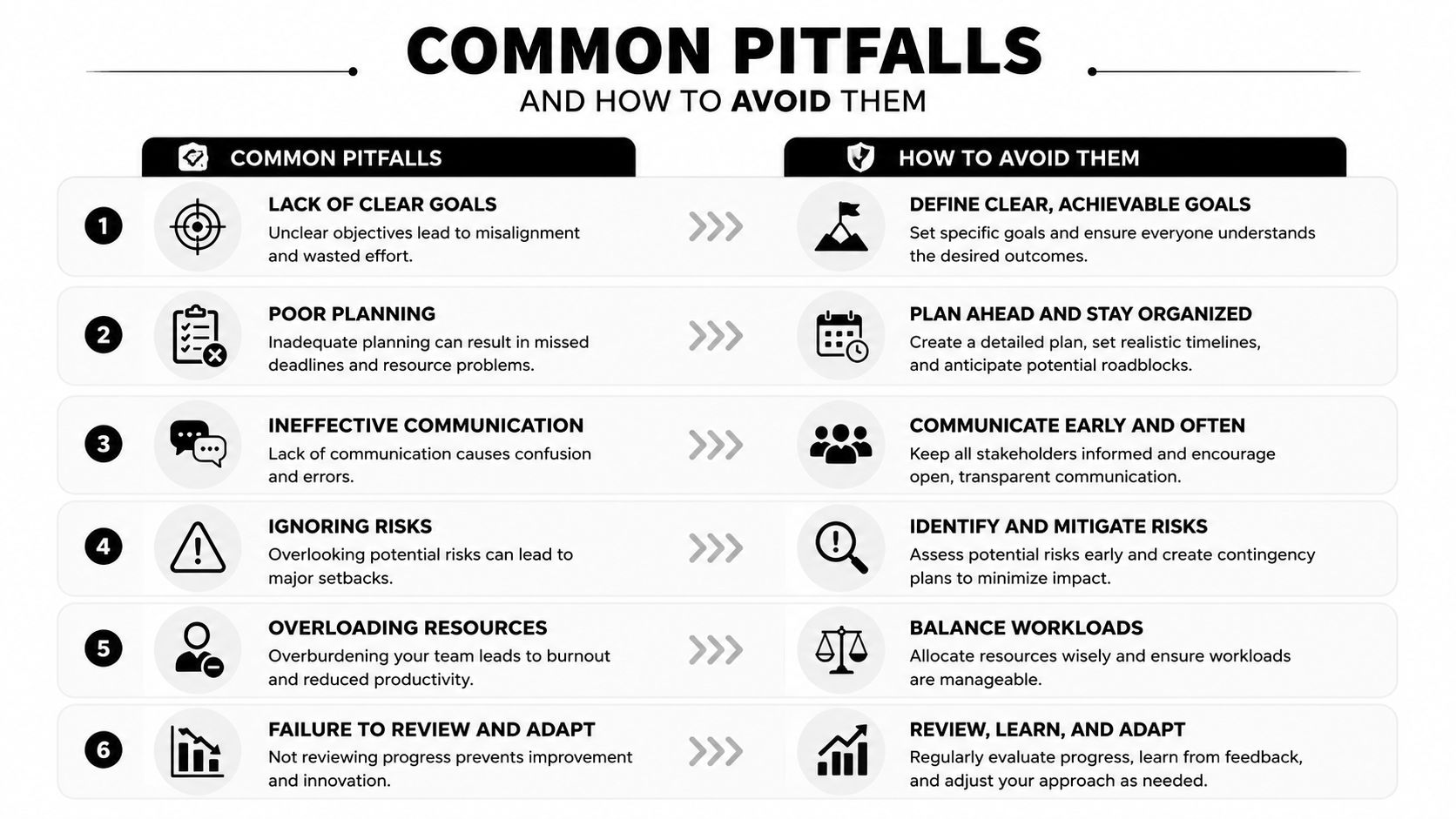
The biggest retirement insurance mistakes are predictable, which means they're avoidable. They usually show up when someone waits too long, assumes the old benefits will persist, or ignores how income changes affect plan costs.
Five mistakes that cause the most damage
- Missing the Medicare window: set calendar reminders three months before 65, during the birthday month, and for the three months after.
- Choosing COBRA without comparison: check marketplace and spouse-plan options before accepting the first bridge that feels familiar.
- Ignoring income planning: ask how withdrawals or asset sales could change MAGI and increase premium-related charges.
- Assuming retiree coverage is permanent: confirm whether the employer-sponsored retiree plan can change or end.
- Skipping annual drug reviews: re-check formularies every year, because a medication that fits today may not fit next year.
The first three mistakes are usually money mistakes. The last two are access mistakes. Both can be expensive.
A simple checklist helps keep the transition controlled. Confirm your end date, confirm your next start date, confirm your doctors and medications, and confirm whether income will affect subsidies or surcharges. If any of those four answers is unclear, the decision isn't ready yet.
For retirees who want help comparing options, working with a broker can be useful when the choice involves underwriting, network continuity, or a plan comparison that isn't obvious on the surface. In a market full of moving parts, the right support can stop a small timing error from becoming a long insurance gap.
If you're retiring soon, gather your medication list, doctor list, and expected income picture now, then compare COBRA, marketplace coverage, spouse coverage, and Medicare add-ons before your current plan ends. If you want a guided review of those trade-offs, contact Bsure Health Brokers and ask for a retirement coverage comparison that fits your doctors, prescriptions, and timing.