
A health insurance premium rebate is a repayment or premium credit when an insurer collected more than a rule or the contract allowed, not an automatic discount for every policyholder. In the United States, the main regulatory example uses minimum healthcare spending thresholds of 80% or 85%, depending on the insurance market.
Why might someone who needed expensive treatment receive money back, while someone who barely visited a doctor receives nothing? Because a premium rebate usually corrects how the insurer used premium income, rather than rewarding your personal claims history.
That distinction matters if you live in Spain. An American rebate cheque, a Spanish cancellation refund and a renewal discount can all sound like money back on insurance, but you need a different reason to qualify for each.
Table of Contents
- What a Premium Rebate Actually Returns
- How the US Loss Ratio Rule Does the Maths
- Rebate Totals and What One Person Receives
- How the Money Reaches You and by When
- Why a Spanish Policy Rarely Pays This Rebate
- When a Rebate Does Not Mean Better Cover
What a Premium Rebate Actually Returns
A premium rebate returns part of the price you paid for insurance when a legal rule or contractual formula requires a correction. It doesn't normally mean the insurer has reviewed your medical appointments and decided you deserve a reward.
Start by identifying which arrangement someone means. The word rebate is often used loosely enough to hide the most important detail: what triggers the payment.
Which premium rebate people usually mean
The US spending thresholds and repayment arrangements below follow KFF's explanation of medical-loss-ratio rebates, which describes the rule's introduction in 2011, the first payments in 2012, and its three-year calculation.
| Meaning | What triggers it | Who receives it | Where it usually applies |
|---|---|---|---|
| US MLR individual or small group | Three-year spending on care and quality below 80% | Individual policyholder directly; for small-group cover, generally the employer first | United States |
| US MLR large group | Three-year spending on care and quality below 85% | Employer, who may share it or cut future premiums | United States |
| No-claims bonus | That person made few or no claims, under the policy's conditions | Policyholder as a discount or refund | Some commercial policies |
| Cancellation refund | Policy ends early and the contract permits repayment | Policyholder, potentially pro-rata | Contract wording, including Spain |
| Promotional discount | Insurer offer at sale or renewal | Buyer, usually for a set period | Marketing, not a regulatory rebate |
The small-group distinction is easy to miss. Although a small employer's policy shares the individual market's spending standard, the employee isn't necessarily the person who receives the insurer's payment.
The same caution applies to the other rows. A cancellation refund isn't automatically available because you stop needing the policy, and a no-claims bonus exists only where the insurer's terms provide one.
A correction, not a personal reward
Think of a household account with money earmarked for a particular purpose. If the agreed rules require a certain share to be used for that purpose, returning a shortfall corrects the account. It doesn't reward whichever household member used the least.
The US rule works on that broad principle, although its actual calculation follows insurance regulations rather than a household budget. Medical Loss Ratio, usually shortened to MLR, describes the share of premium revenue allocated to clinical care and activities that improve healthcare quality.
Practical rule: Before asking how much you might receive, establish which rule could require anyone to pay you.
Write down your country, who pays the premium, and whether the repayment appears in the policy wording or a regulatory notice. Those details tell you whether you're investigating an insurer-wide spending correction, an employer allocation or a contractual benefit.
Without them, two people discussing a health insurance premium rebate may be talking about entirely different things.
How the US Loss Ratio Rule Does the Maths
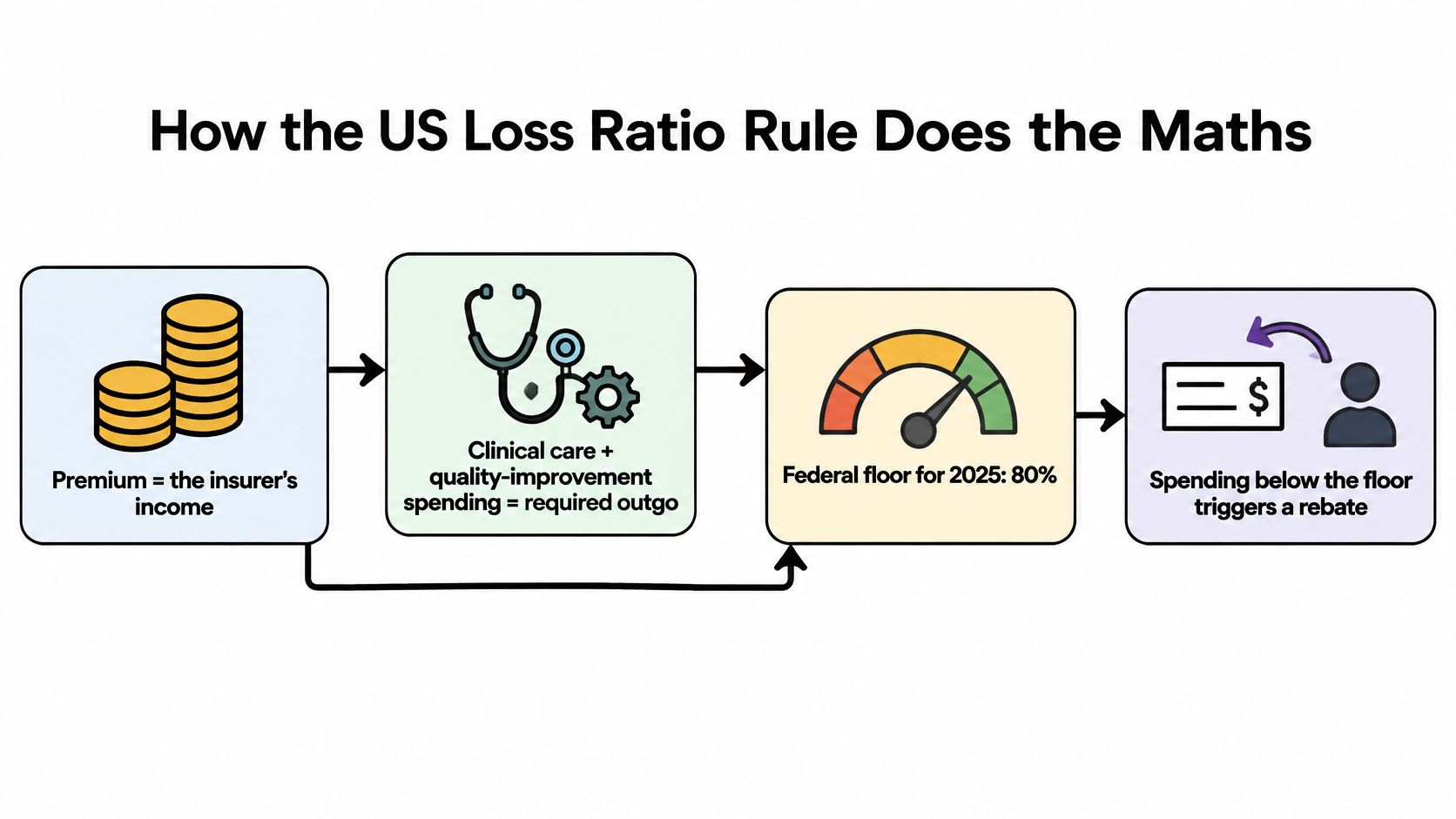
Treat premiums as the insurer's income and spending on clinical care and healthcare quality as the relevant outgo. The calculation asks whether the insurer devoted enough of that income to those purposes under the applicable rules.
It doesn't ask whether you personally received treatment worth as much as your premium. Insurance pools risk, so your benefits aren't a savings account with an unused balance waiting to be returned.
The spending floor and the shortfall
The federal spending standards in the Code of Federal Regulations set the 2025 floors at 80% for individual and small-group insurance and 85% for large-group insurance.
| Market or case | Required share on care and quality | Rebate result |
|---|---|---|
| Individual market | 80% | Owed if the applicable three-year average is below 80% |
| Small-group market | 80% | Owed if the applicable three-year average is below 80% |
| Large-group market | 85% | Owed if the applicable three-year average is below 85% |
| Worked individual example | 75% against an 80% standard | 5% of that enrollee's eligible premium |
For the worked case, the federal calculation example specifies that an insurer with a 75% medical-loss ratio against an 80% standard owes 5% of the enrollee's eligible premium for the reporting year.
The important word is eligible. You shouldn't multiply the shortfall by every healthcare expense you paid, add your co-payments or treat the result as compensation for unused benefits. The insurer must apply the prescribed calculation and allocation rules.
Why a quiet claims year isn't enough
The National Association of Insurance Commissioners' MLR explanation describes a three-year rolling average, using adjusted claims and quality-improvement spending rather than an individual member's claims record.
That averaging matters because claims fluctuate. A quieter period alone doesn't necessarily create a payment if the insurer's applicable calculation still meets the standard.
Consider two people covered within the same relevant insurance pool. One receives ongoing treatment; the other has no appointments. Their different use of healthcare doesn't, by itself, determine whether the insurer owes an MLR rebate.
The useful questions on a notice are therefore:
- Which market applies? Individual, small-group and large-group coverage don't all use the same standard.
- Which reporting period is covered? The calculation concerns completed insurer performance, not a promise about the next renewal.
- Which premium amount was used? Check the eligible premium and the allocation to your coverage.
These details explain the calculation more reliably than counting your doctor visits.
Rebate Totals and What One Person Receives
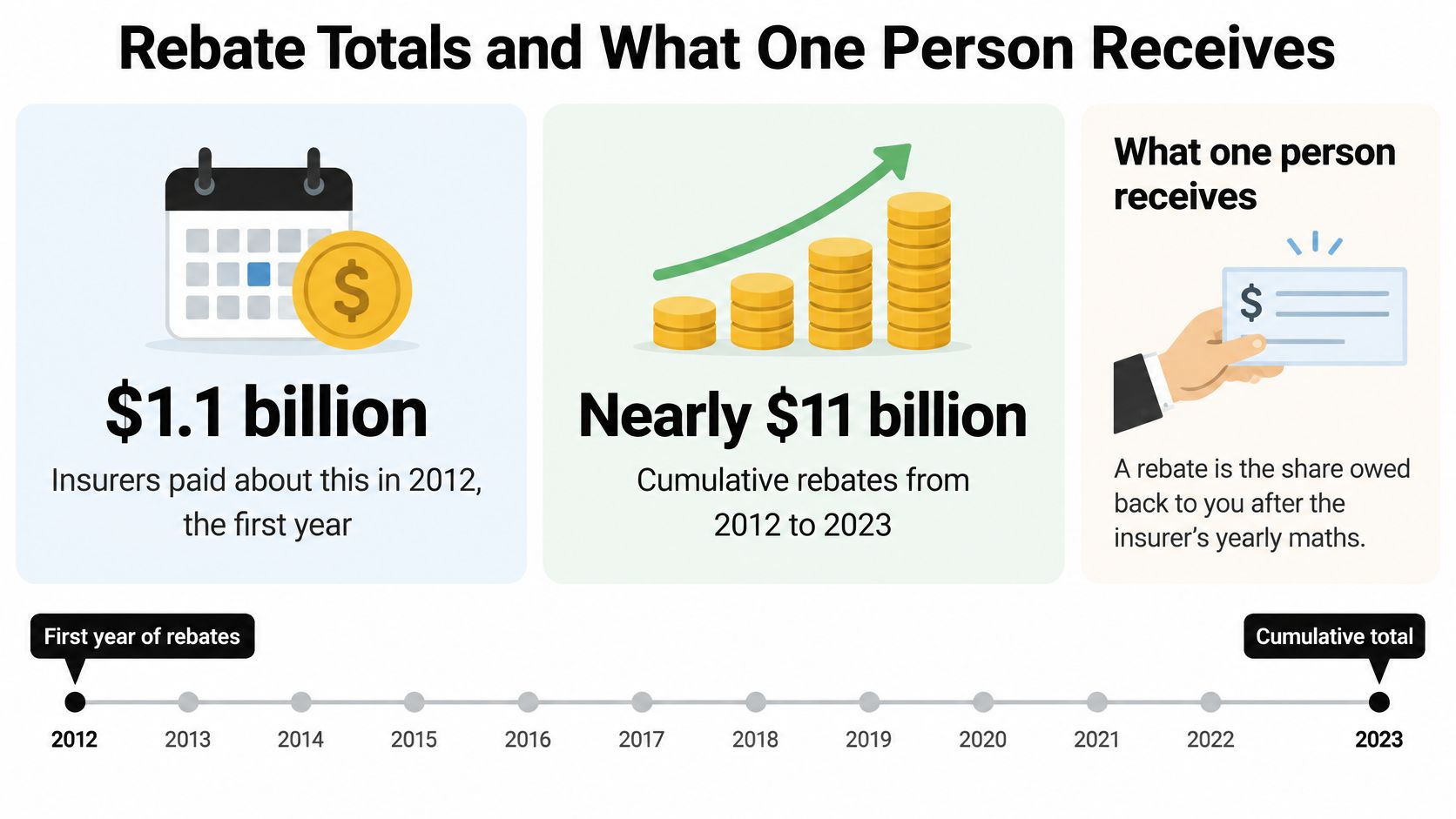
A national rebate total works like the refunds ledger in a large shop: it records everything handed back to every customer, not the amount any one person collects. The figure describes money owed by insurers that missed the applicable spending requirement, and it reaches only the policyholders those insurers covered.
That distinction sharpens when a headline mixes individual and employer-sponsored insurance. A repayment routed through an employer's plan counts toward the national total before anyone works out what reaches each employee.
US premium rebate totals and averages
Three sources anchor the record. PolitiFact's analysis citing federal rebate data reports approximately $1.1 billion paid in 2012, the first year of ACA medical-loss-ratio payments, and nearly $11 billion cumulatively by 2023. KFF's rebate analysis reports a 2025 total of more than $1.6 billion, reaching approximately 8.6 million people at an overall average of $192, with market averages of $233 individual, $190 small-group and $91 large-group. At state level, the Massachusetts Executive Office of Health and Human Services approved $75.6 million for 2025, $24 million more than the $51.6 million approved in 2024.
| Period or market | Amount | Who it reached or the average |
|---|---|---|
| 2012 first payments | About $1.1 billion | First year of ACA medical-loss-ratio payments |
| Cumulative 2012 to 2023 | Nearly $11 billion | Running total since the rule began |
| 2025 reported total | More than $1.6 billion | About 8.6 million people, averaging about $192 |
| 2025 individual market | About $233 per person | Highest of the three market averages |
| 2025 small-group market | About $190 per person | Close to the overall average |
| 2025 large-group market | About $91 per person | Lowest of the three market averages |
| Massachusetts 2025 | $75.6 million | Consumers and small businesses, up from $51.6 million in 2024 |
Read the period before comparing amounts
A cumulative twelve-year total and a single year's payments answer different questions, so check which period a figure covers before comparing it with another headline. An average, meanwhile, describes only the people who received money, not everyone who paid a premium.
A national average describes the reported recipients. It doesn't tell you what your employer will pass on or whether your policy qualifies.
If you hold or are pricing a Spanish private policy, none of these figures forecasts money back for you. Your budget starts from the premium you are quoted, and a health insurance premium calculator gives you that starting figure. Subtracting a US average rebate from a Spanish premium would be like budgeting your groceries around a stranger's loyalty-card refund.
The only repayment that matters to your household accounts is one attached to your own policy's wording. Plan on the amount you are obliged to pay, and treat any refund or credit as real only when your documents substantiate it.
How the Money Reaches You and by When
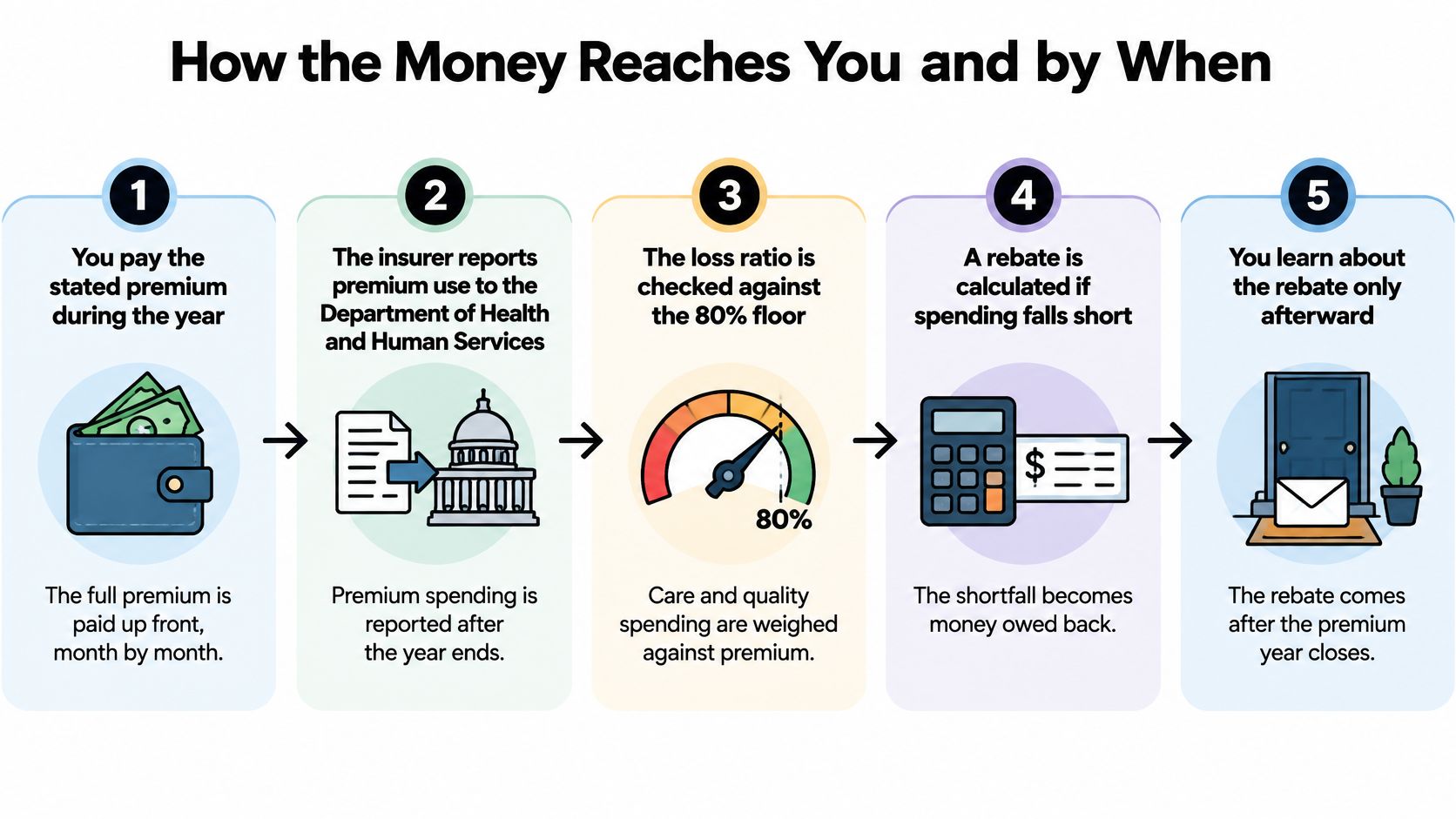
You normally pay the stated premium while insured. The insurer then reports how it used premium income, and any qualifying regulatory repayment follows afterward.
Under the federal MLR distribution rules, insurers report to the Department of Health and Human Services and generally must distribute qualifying rebates by September 30 following the relevant reporting year; older rules used an August 1 deadline.
Follow the recipient, not just the amount
The insurer completes its calculation. It establishes whether the relevant business owes a rebate under the reporting rules. Your normal premium bill doesn't become optional while this happens.
Individual coverage follows the direct route. The policyholder normally receives a payment or a credit against future premiums. Check whether the notice describes money arriving separately or an adjustment to a bill.
Employer coverage follows the group route. The employer may receive the insurer's payment and allocate the appropriate employee benefit through a distribution, reduced contributions or benefits. Don't assume the insurer's group total is yours to divide equally among colleagues.
Match the notice to the transaction. Compare the stated method with your bank statement, premium invoice or payroll deduction. Keep the notice alongside the record showing how the rebate was applied.
The employer route needs particular care. Ask payroll or the benefits administrator which portion relates to employee contributions and how that portion has been used. An employer allocation should be explained, not guessed from the insurer's headline amount.
Check changes and tax separately
Switching insurers or cancelling cover is a reason to verify the applicable eligibility and payment arrangements. It isn't a reliable basis for assuming either that you lose a rebate or that you qualify for a cancellation refund.
Tax treatment also needs a separate check. Keep records of who originally paid the premium and whether payments were made through an employer arrangement, then obtain guidance appropriate to your circumstances rather than assuming every refund is tax-free.
Before filing the notice away: Confirm the payment deadline, the delivery method and any employer allocation.
If the notice promises a credit, look for it on the relevant bill. If it promises a payment, retain enough documentation to query a missing or unexplained amount without having to reconstruct your coverage history.
Why a Spanish Policy Rarely Pays This Rebate
An American insurance rule doesn't become part of your Spanish policy because you're an American citizen or read about it while arranging your move. The policy's jurisdiction and terms matter more than your nationality.
The US mechanism described in CMS's medical-loss-ratio resources concerns qualifying US insurance arrangements. You shouldn't assume a Spanish private policy or an international plan offers an equivalent repayment.
Read the clause that creates the right
For Spain-based buyers, the practical task is to identify the contractual promise behind the word rebate.
| Wording you encounter | What you need to establish |
|---|---|
| Cancellation refund | Whether cancellation is permitted and how any return premium is calculated |
| No-claims benefit | Whether the policy actually offers it and which claims affect eligibility |
| Promotional discount | How long the reduction lasts and what price applies at renewal |
| Tax benefit | Whether this concerns your tax position rather than money returned by the insurer |
A pro-rata refund means a repayment calculated in proportion to an eligible unused period. It doesn't mean every annual policy can be cancelled whenever you choose with the remaining premium returned.
Likewise, a discounted first premium doesn't establish a right to the same reduction indefinitely. Look for the renewal wording, not just the sales illustration.
A newcomer's common misunderstanding
Say you buy private cover for a Spanish residence application and barely use it. At renewal, you ask why the insurer hasn't returned the money you didn't spend on appointments.
The missing step is a clause or legal mechanism requiring that payment. You bought protection against covered medical costs, not a personal treatment allowance that must be exhausted or refunded.
Before comparing refunds, identify the types of health insurance in Spain relevant to your situation. A national private policy and an international arrangement may have different cancellation terms, geographical limits and administrative requirements.
For residence-related cover, keep these checks separate:
- Application requirements: Confirm that the benefits and policy conditions meet the requirements of your particular process.
- Treatment access: Read waiting periods, exclusions, provider arrangements and co-payments.
- Exit terms: Establish what happens if you switch, cancel or no longer need the policy.
At Bsure Health Brokers, we assist with policy changes, renewals and communication with the insurer. That support helps you resolve what your existing wording permits without treating a foreign rebate mechanism as a promise your policy never made.
When a Rebate Does Not Mean Better Cover
Receiving money back is welcome. It still doesn't prove that you bought the best insurance.
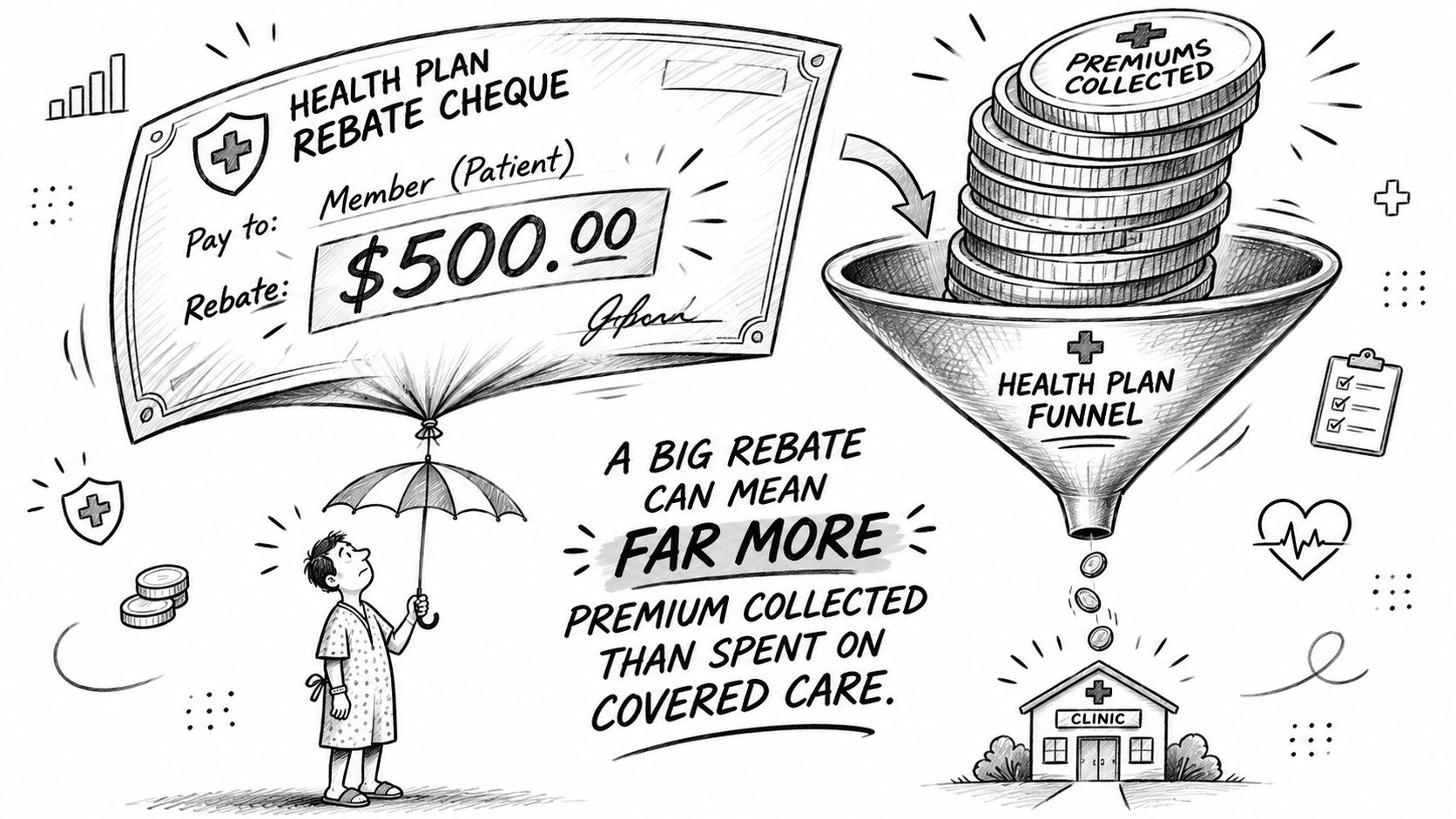
A rebate can follow claims spending that was lower than the insurer expected. That result alone doesn't tell you whether members stayed well, benefits were limited or people had difficulty accessing treatment. The payment identifies a spending outcome, not its full explanation.
Judge the care you can actually obtain
Consider two otherwise plausible policies. One advertises a rebate history but excludes a specialist service you need; the other has no rebate to advertise but covers that service through an accessible local provider.
The useful comparison isn't the refund alone. It's what you'll pay and what treatment you can realistically obtain under each contract.
Use a structured health insurance plan comparison to examine the details that affect your day-to-day care:
- Renewal price: Compare the ongoing premium, not only the introductory offer.
- Exclusions: Check the services and conditions the insurer won't cover, especially where you have an existing diagnosis.
- Hospitals and specialists: Verify access to the providers you expect to use.
- Waiting periods: Establish when particular benefits become available.
- Out-of-pocket costs: Read co-payments and other amounts you must pay yourself.
- Claims procedures: Understand authorisations, reimbursement requirements and the documents you'll need.
For someone receiving regular care, these questions are concrete. A refund doesn't compensate for discovering that your preferred hospital is outside the network or that a planned treatment isn't covered.
Separate a known saving from possible money back
A contractual price reduction is something you can evaluate against the written quotation. A promotional reduction needs an expiry and renewal check. A retrospective regulatory payment belongs in a different category because it isn't a price promise made when you buy.
Don't combine them into a single savings claim. If an illustration deducts possible money back from the annual premium, ask what document guarantees that deduction and what conditions could prevent it.
Budgeting check: If neither a valid notice nor an applicable clause establishes the repayment, leave it out of your spending plan.
Keep the final decision practical. Save the quotation, policy schedule, exclusions and any refund wording together so you can compare the offer with what the insurer issues.
For Spanish or international cover, also distinguish an identification document from the insurance requirements attached to a particular residence or visa process. Needing an NIE doesn't, by itself, explain which insurance conditions apply to your circumstances.
At Bsure Health Brokers, our advice is independent and impartial, and we help with communication and policy administration after purchase. The aim is to make the cover understandable before an unexpected bill or renewal exposes a mistaken assumption.
A rebate history is context, never a quality score. Choose insurance you can understand and use at a price you can sustain, then treat any properly established repayment as a separate adjustment.
Bsure Health Brokers offers a no obligation quote and can help you compare Spanish cover without confusing contractual savings with an American regulatory rebate. We don't charge a fee because our service is included in the policy price, which is the same as buying direct. Visit Bsure Health Brokers or email healthcover@bsureinsurance.com with your current wording or quotation to discuss the cover, renewal terms and refund conditions relevant to you.