
You logged into your insurer's portal on December 18 and saw the premium increase waiting for you. The open enrollment deadline passed three days ago, your preferred doctor is attached to the current network, and your first thought is probably the worst one: “Am I trapped here for another year?”
That fear is understandable. Changing health insurance after open enrollment can affect your doctor, hospital access, prescription treatment, pre-existing conditions, and out-of-pocket costs. But missing the main window doesn't always end your options.
In the United States, a qualifying life event can open a Special Enrollment Period. In Spain, private health insurance generally works through year-round applications and individual underwriting rather than a single statutory enrollment season. That doesn't mean every insurer will accept you or preserve your existing terms.
The right response is practical: identify the rule that applies to you, gather proof, compare equivalent cover, and never cancel your current policy before the replacement is confirmed. The following plan shows how to do that without creating a gap or losing access to care.
Table of Contents
- You Missed the Window Now What
- How Open Enrollment and Qualifying Life Events Work
- Qualifying Life Events That Unlock a Switch
- How to Switch Private Health Insurance in Spain Mid-Year
- When Staying Put Beats Switching
- Your 30-Day Switch Timeline and Document Checklist
- Rules Worth Remembering Before You Move
You Missed the Window Now What
Start with the reason you want to move. A premium increase is frustrating, but by itself it usually doesn't create a free right to switch an ACA Marketplace plan outside the enrollment period. A marriage, move, loss of coverage, or another qualifying event can change the answer.
The first route is a Special Enrollment Period, or SEP. U.S. Marketplace guidance says open enrollment runs from November 1 through January 15 each year, and outside that period you can change plans only if you qualify for an SEP because of a qualifying life event (HealthCare.gov explains changing plans after enrollment). Consumers usually have 60 days from the qualifying event to enroll or switch, so the event date matters more than the date you noticed the premium.
The second route applies to expats in Spain. Private insurers can accept applications throughout the year, but each new application is an underwriting decision. The insurer may review your medical history, apply exclusions, impose waiting periods, request additional documents, or decline the application. You haven't escaped the calendar. You've moved into a market where medical acceptance is the gatekeeper.
Broker rule: Never treat a quote as replacement cover. A quote is only an option until underwriting is complete, the policy is issued, and the start date is confirmed in writing.
A reader who lost employer coverage has a different problem from someone who dislikes a renewal price. The first person should investigate SEP eligibility immediately. The second may need to compare private alternatives, negotiate renewal terms, or remain insured while applying elsewhere.
Your next move should be to write down four dates: the date of the life event, the date you reported it, the deadline shown by the Marketplace or insurer, and the proposed start date of the replacement plan. Keep every email, upload receipt, and confirmation number. A week-by-week process can keep the paperwork moving while you protect the cover you already have.
How Open Enrollment and Qualifying Life Events Work
The United States and Spain use different systems, but the practical question is the same: what gives you the right or opportunity to change cover now?
For U.S. ACA Marketplace plans, open enrollment is the normal route. HealthCare.gov states that the annual period runs from November 1 to January 15. Outside it, a qualifying life event can trigger an SEP, allowing you to enroll or switch plans. During open enrollment, you can change your selection before the deadline, and the last completed selection controls the upcoming coverage year, as explained in HealthCare.gov's guidance on keeping or changing a plan.
Spain's private market doesn't follow that same statutory calendar. Insurers may quote and underwrite new applicants throughout the year, but they don't have to offer identical terms to an existing policy. A new application can lead to a clean acceptance, a policy with exclusions, a policy with waiting periods, or a refusal.
| Rule | US ACA Marketplace | Spain Private Insurance |
|---|---|---|
| Normal opportunity to change | Annual open enrollment | Applications may be made throughout the year |
| Mid-year unlock | A qualifying life event can create an SEP | The insurer's underwriting decision determines whether a new policy is available |
| Main evidence | Proof of the qualifying event and Marketplace eligibility | Identity, residency, policy history, and medical information |
| Main risk | Missing the SEP or failing to provide acceptable documents | New exclusions, waiting periods, altered terms, or declined cover |
| Practical priority | Report the event and complete plan selection promptly | Obtain written acceptance before cancelling the current policy |
For a useful explanation of terms such as carencia, exclusions, copayments, and policy conditions, keep this health insurance terminology guide for Spain beside your documents.
The four SEP mechanics
Think of an SEP as a checklist, not a loophole.
- Trigger event: Identify the event that created eligibility. A general wish to pay less isn't the same as losing coverage or moving.
- Documentation deadline: Submit the evidence the Marketplace requests. An application can fail when the applicant reports the right event but uploads incomplete or unacceptable proof.
- Coverage effective date: Confirm exactly when the new plan begins. Don't assume approval and effective coverage happen on the same day.
- Plan selection window: Complete the application and choose the plan inside the permitted period. Federal guidance explains that some pathways allow action after, and in certain circumstances before, the event. The CMS explanation of Special Enrollment Periods sets out why the event date is central.
The most common avoidable error is missing the evidence deadline. Save documents as clear files, use the requested form, and check your online account after uploading. If the Marketplace asks for proof, an unsigned letter or the wrong version of a document can leave the application unresolved until the window closes.
Qualifying Life Events That Unlock a Switch
A qualifying event is useful only when you can prove it and act within the applicable window. Federal Marketplace guidance generally gives consumers 60 days from the event to enroll or change plans, so don't wait for the next premium notice to start collecting evidence.
The events expats encounter most often
Losing a job and employer coverage: Gather the employer's termination or benefits-loss letter, then check whether the event has been reported as a loss of minimum essential coverage. The mistake is treating a voluntary cancellation as the same event as involuntary loss of coverage. COBRA may be a temporary bridge, but compare its cost and duration before accepting it automatically.
Marriage: Keep the marriage certificate and evidence of existing coverage or residence if requested. The usual failure is submitting a certificate that doesn't match the name or date on the Marketplace application.
Divorce: Provide the divorce decree or other official proof and confirm who loses access to the existing policy. Don't assume the decree itself changes the plan. You still have to report the event and complete selection.
Birth, adoption, or foster placement: Keep the birth record, placement paperwork, or adoption documents. The common error is waiting until a medical appointment and discovering that the child was never properly added to the application.
Moving to a new coverage area: A move can qualify under Marketplace rules when it changes the coverage area, but you may need proof of the old and new addresses. In Spain, moving between autonomous communities creates a separate network question. Check the hospitals and specialists available at the destination before accepting a new policy.
Loss of public or other qualifying coverage: Save the official termination notice and the final date of cover. Don't upload only a bank statement showing a premium stopped. The insurer or Marketplace needs evidence that coverage ended and why.
Ageing off a parent's plan: In the United States, turning 26 can end dependent coverage under common employer arrangements. In Spain, an equivalent transition may occur when a student policy ends. Obtain the policy termination letter rather than relying on your birthday or graduation date as proof.
Gaining citizenship or lawful residence: Keep the citizenship record, residence permit, or other official status document. A frequent error for expats is submitting an expired identity document or failing to make the name on the application match the passport or residence record.
Death of a covered family member: Obtain the death certificate and the insurer's notice showing whose coverage is affected. Don't assume the remaining family members will be moved automatically to an individual plan.
An income change affecting ACA assistance: Report the change through the Marketplace and keep income evidence, employer records, or other requested documents. The mistake is filing the wrong update, such as changing household income without updating household composition or tax information.
A qualifying event doesn't guarantee that every available plan will suit your doctors, medicines, or budget. It only opens the door to plan selection. After that, you still need to verify the network, benefit design, effective date, and documentation status.
How to Switch Private Health Insurance in Spain Mid-Year
Spain's private market rewards preparation, not rushed cancellation. You can ask a new insurer for a quote at any point, but the insurer will decide whether to accept the risk and under what terms.
Start with comparable policies
Shortlist two or three insurers that operate in your autonomous community and include the hospitals you typically use. Sanitas, Adeslas, DKV, and Asisa are examples to investigate, not automatic recommendations. A national brand can still have a weak local network for your preferred hospital or specialist.
Ask each insurer to quote the same coverage structure. Compare hospitalisation, outpatient consultations, diagnostics, emergency treatment, maternity, mental health, dental benefits, copayments, reimbursement limits, and international assistance. Marketing labels such as “complete” or “premium” aren't comparison points.
Treat underwriting as the decision point
Complete every medical questionnaire fully and accurately. Include diagnoses, consultations, tests, medication, operations, symptoms under investigation, and ongoing referrals. Hiding a condition can create a dispute when you later claim for related treatment.
The insurer may accept you without qualification, accept you with exclusions, add waiting periods, adjust the premium, ask for reports, or decline the application. Don't rely on a sales representative's verbal assurance that a condition “should be fine.” Ask for the final underwriting terms in writing.
Check waiting periods and continuity evidence
Spanish policies can include carencias, meaning periods during which certain benefits aren't available. Surgery, childbirth, advanced diagnostics, and other high-cost services may have separate conditions. Read the schedule of waiting periods and ask whether your previous insurer can issue a certificado de antigüedad confirming continuous cover.
Continuity evidence may help an insurer assess whether waiting periods can be waived, but never assume a waiver applies. Get the accepted benefits, exclusions, and waiver in the policy documents before you act.
The safest sequence is simple: apply first, receive written acceptance, confirm the effective date, then cancel the old policy.
Sign the new póliza only after checking the policyholder names, dependants, address, payment details, copayment terms, exclusions, and start date. The new start date should follow the cancellation terms of the existing policy without leaving a gap. It also shouldn't create an unnecessary overlap unless you have a deliberate reason and have checked the cost.
Cancel the old policy in writing and keep proof of delivery. A phone call may create a customer-service note, but it isn't the same as a written cancellation record. The practical details of policy changes, insurer communication, and Spanish cover terminology are also covered in this guide to what a health insurance broker does.
When Staying Put Beats Switching
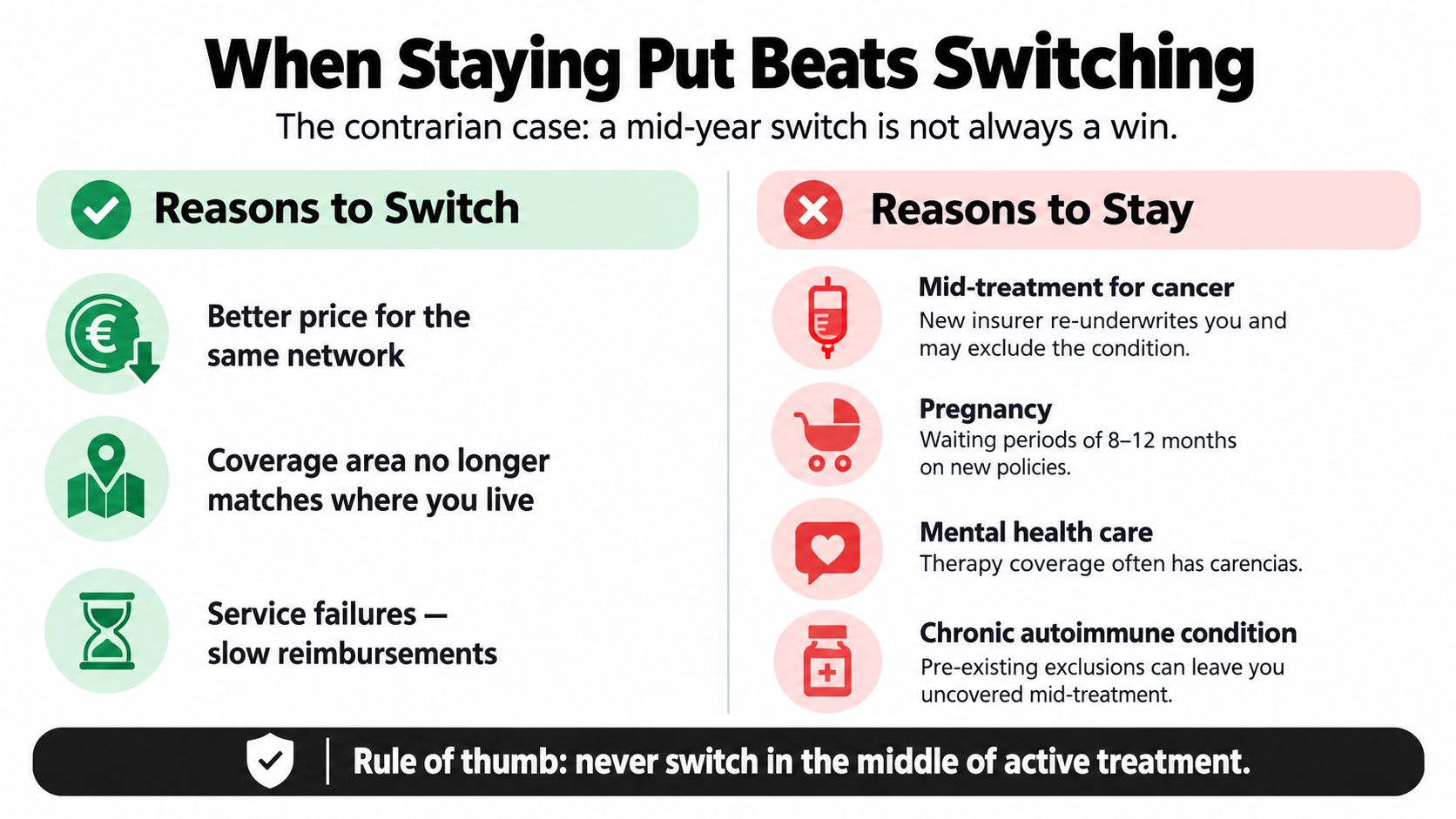
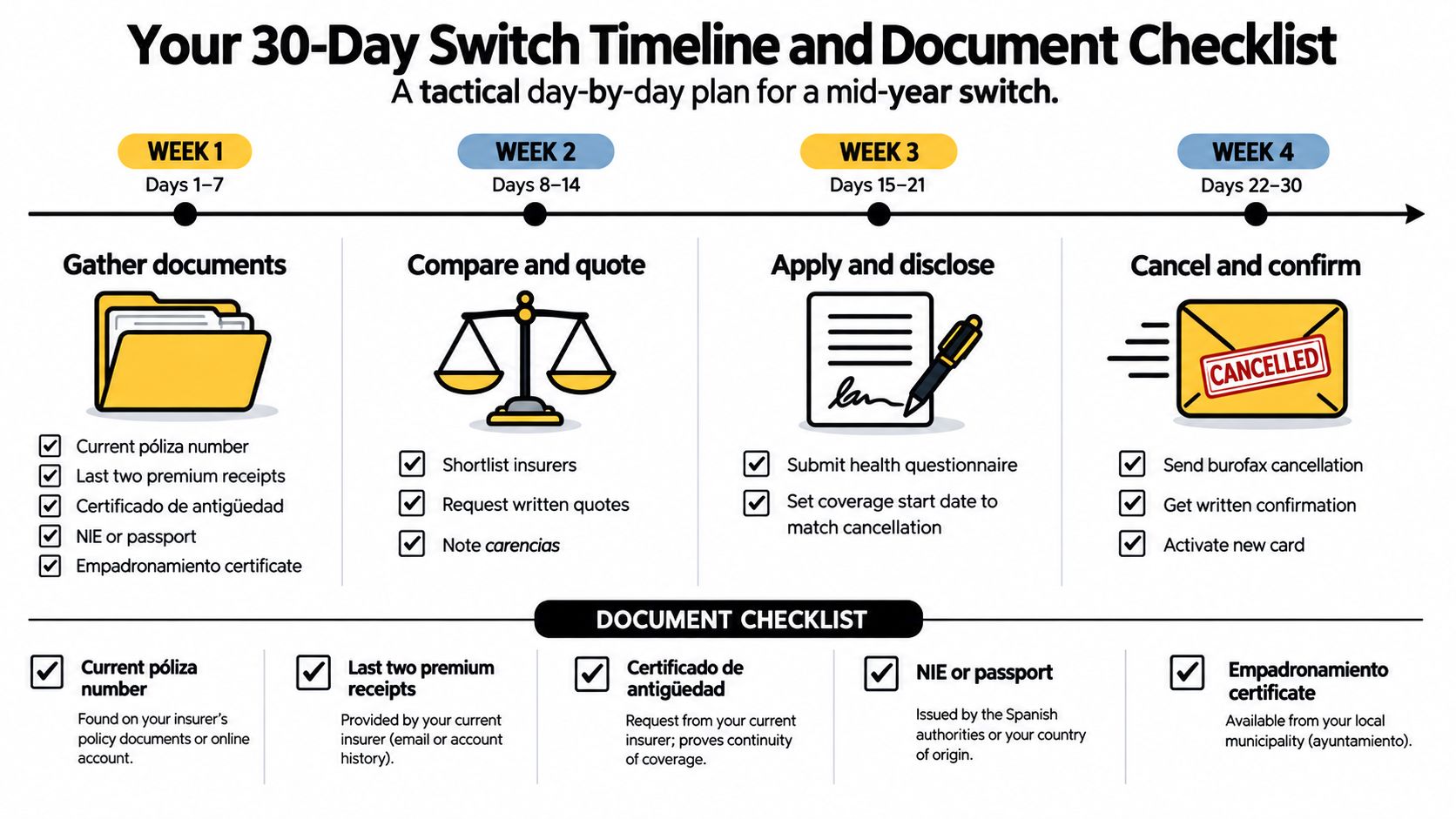
A cheaper policy can be the wrong policy if it removes the doctor, hospital, or medicine you need this month. Staying put is sometimes a deliberate risk-management decision, not a failure to find a better deal.
The danger is greatest during active treatment. A new insurer may reassess your medical history, apply fresh carencias, or exclude the very condition driving your healthcare use. That can leave you paying privately or facing a coverage dispute halfway through treatment for cancer, pregnancy, mental health care, or a chronic autoimmune condition.
Public Medicare guidance also highlights the wider continuity problem. Moving between coverage types can create separate decisions about drug coverage and supplemental insurance, while changing plans can affect out-of-pocket accumulators. Read the Medicare guidance on open enrollment and plan changes if Medicare is part of your situation.
Ask yourself four direct questions:
- Am I in active treatment? If yes, protect continuity before chasing a lower premium.
- Could the new insurer exclude my condition? If the answer is possible, obtain written underwriting terms first.
- Will the saving outweigh the new restrictions? Compare the actual network, copayments, exclusions, and waiting periods, not just the monthly price.
- Have I completed the current policy's exclusion or waiting requirements? A policy with established continuity may be more valuable than a superficially cheaper replacement.
Spanish insurers may also offer better renewal treatment to customers with uninterrupted cover, such as more predictable terms or broader access to established benefits. Don't assume that advantage applies to your policy. Ask what you would lose by cancelling and what, if anything, the replacement insurer will recognise.
Stay insured while you investigate. You can apply for a new policy without surrendering the one that currently pays your claims.
Your 30-Day Switch Timeline and Document Checklist
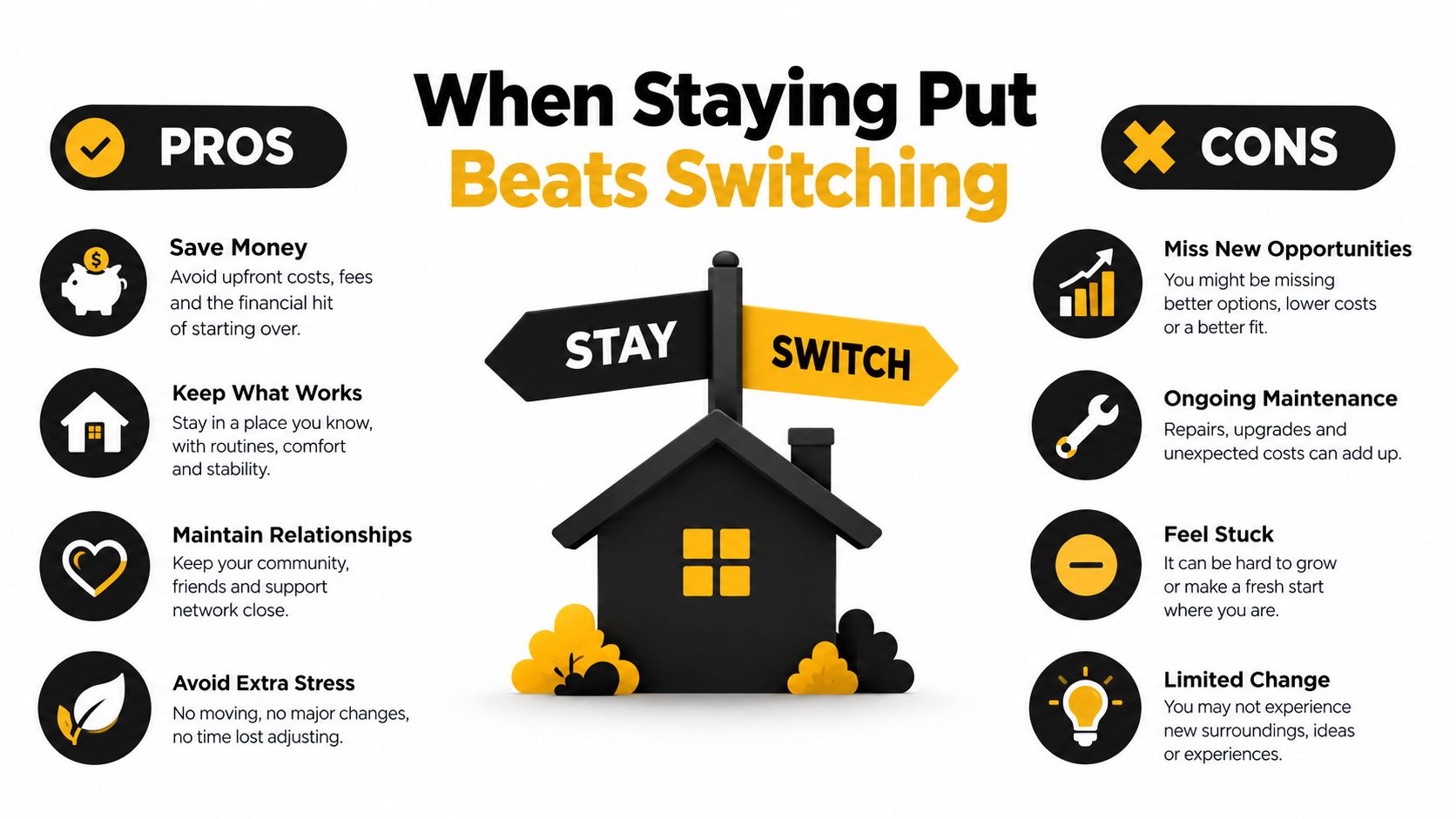
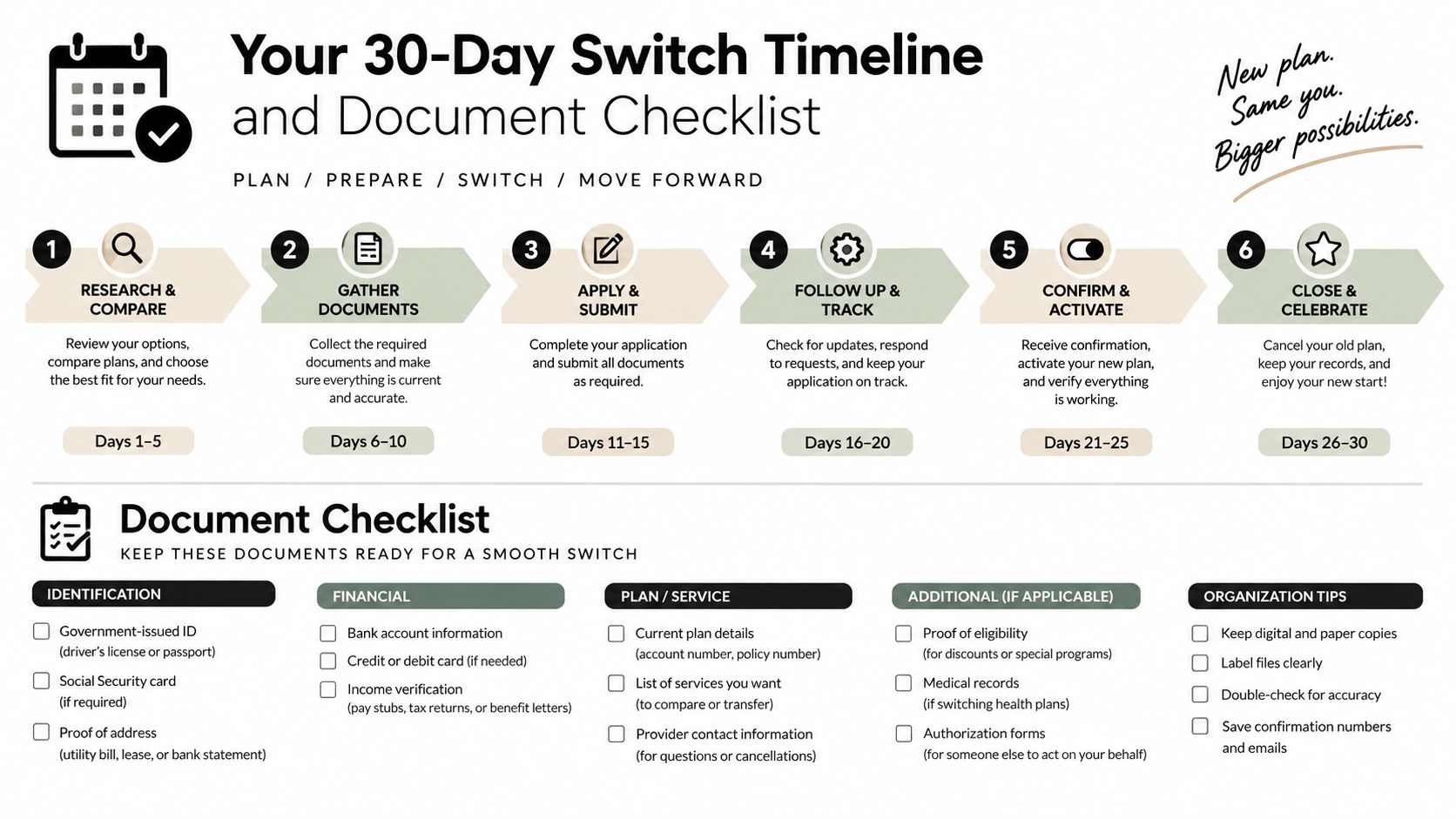
Use the timeline as an operating plan, not a promise that every insurer will complete underwriting within the same period. The purpose is to make each decision visible before you cancel anything.
Week one
Gather the records that prove your current position:
- Current póliza number and policy schedule
- Recent premium receipts
- Certificado de antigüedad
- NIE or passport
- Empadronamiento certificate
- Current insurer's contact details
- List of doctors, hospitals, and medicines you need covered
- Relevant medical reports and treatment information
Request itemised quotes from three candidate insurers. Ask them to quote equivalent copayments, hospital access, outpatient benefits, and deductible terms. If one quote is cheaper because it removes a benefit, it isn't a cheaper version of the same policy.
Week two
Complete the medical questionnaires carefully. Don't delegate your medical history to memory or guesswork. If you want continuity evidence considered, submit the certificado de antigüedad and ask the insurer to state in writing which waiting periods it waives.
Confirm the proposed start date with every candidate. Ask whether the quote is conditional, whether further reports are required, and whether any exclusion has already been added. Keep the responses in one folder.
Week three
Choose the policy only after receiving the underwriting outcome and reading the exclusions. Sign the new póliza, download the digital card, save app credentials, and verify that the first premium payment has cleared.
Then check the operational details:
- The policyholder and dependants are spelled correctly.
- The hospital network includes your required facilities.
- The effective date is clear.
- The waiting-period waiver is documented.
- The insurer has confirmed how to request authorisations and referrals.
Week four
Send written cancellation to the current insurer using the method required by the policy. A burofax or certified email can create a useful delivery record, but follow the insurer's stated process and retain the receipt.
Never cancel because an agent says the new policy is “approved” if you haven't received the policy documents. File the cancellation response, new policy, payment confirmation, digital card, and all underwriting correspondence together. The practical details of waiting periods and their effect on access to treatment are set out in this guide to medical insurance waiting periods.
Final confirmation checklist
Before the old policy ends, obtain confirmation of:
- New policy issuance: The insurer has issued the policy, not merely created a quote.
- Effective date: The start date is shown in writing and aligns with your cancellation plan.
- Payment status: The first premium has cleared or the insurer has confirmed the payment arrangement.
- Access to care: You have the card, app access, authorisation instructions, and emergency contact details.
If any one of those confirmations is missing, pause the cancellation. A delayed administrative task is inconvenient. A gap in cover is a financial and medical problem.
Rules Worth Remembering Before You Move
Don't cancel first. The replacement policy must be issued, paid, and active before the existing policy ends.
Don't assume continuity transfers automatically. A new insurer may require medical disclosure, apply exclusions, or impose fresh carencias even when you've held cover for years.
Don't pay on the basis of a verbal promise. Ask for the final premium, exclusions, benefit limits, waiting-period waivers, and effective date in writing.
Do keep a complete digital file. Save every questionnaire, medical report, upload receipt, email, quote, cancellation notice, and policy document. If an insurer disputes what you disclosed, your records matter.
Don't confuse a qualifying event with automatic approval. In the ACA Marketplace, you still need to report the event, establish eligibility, provide acceptable evidence when requested, and complete plan selection inside the permitted window.
Do compare the treatment you might need, not just the premium you want to pay. Network access, ongoing medicines, specialist continuity, authorisations, and exclusions determine whether a policy works when you claim.
Don't use an SEP as a fallback plan. It exists because a qualifying event creates a specific right to act. If you miss the deadline or cannot prove the event, the opportunity may disappear.
Bsure Health Brokers compares Spanish and international health policies, handles insurer paperwork and policy changes, and helps expats assess networks, waiting periods, and pre-existing-condition terms before they cancel existing cover. Visit Bsure Health Brokers to request a practical comparison for your region and situation.