
You've just left a clinic in Marbella with an informe médico, a card receipt, and a prescription folded into your bag. The receptionist told you to “send everything to the insurer,” but nobody explained which documents matter, whether the clinic should have called first, or what happens if the insurer later says the treatment wasn't covered.
That uncertainty causes more trouble than the claim form itself. In my experience helping expats in Spain, the decisive choices are often made before anyone uploads a document, especially in the first 48 hours after treatment. A missing signature, vague invoice, absent authorisation reference, or report that doesn't connect the diagnosis to the treatment can leave an otherwise genuine claim rejected.
The practical answer to how to file a health insurance claim is therefore broader than “complete the form.” First identify which payment route applies, then build an evidence file that allows the insurer to verify eligibility, medical necessity, and payment without having to guess.
Table of Contents
- Two Paths for Filing a Health Insurance Claim
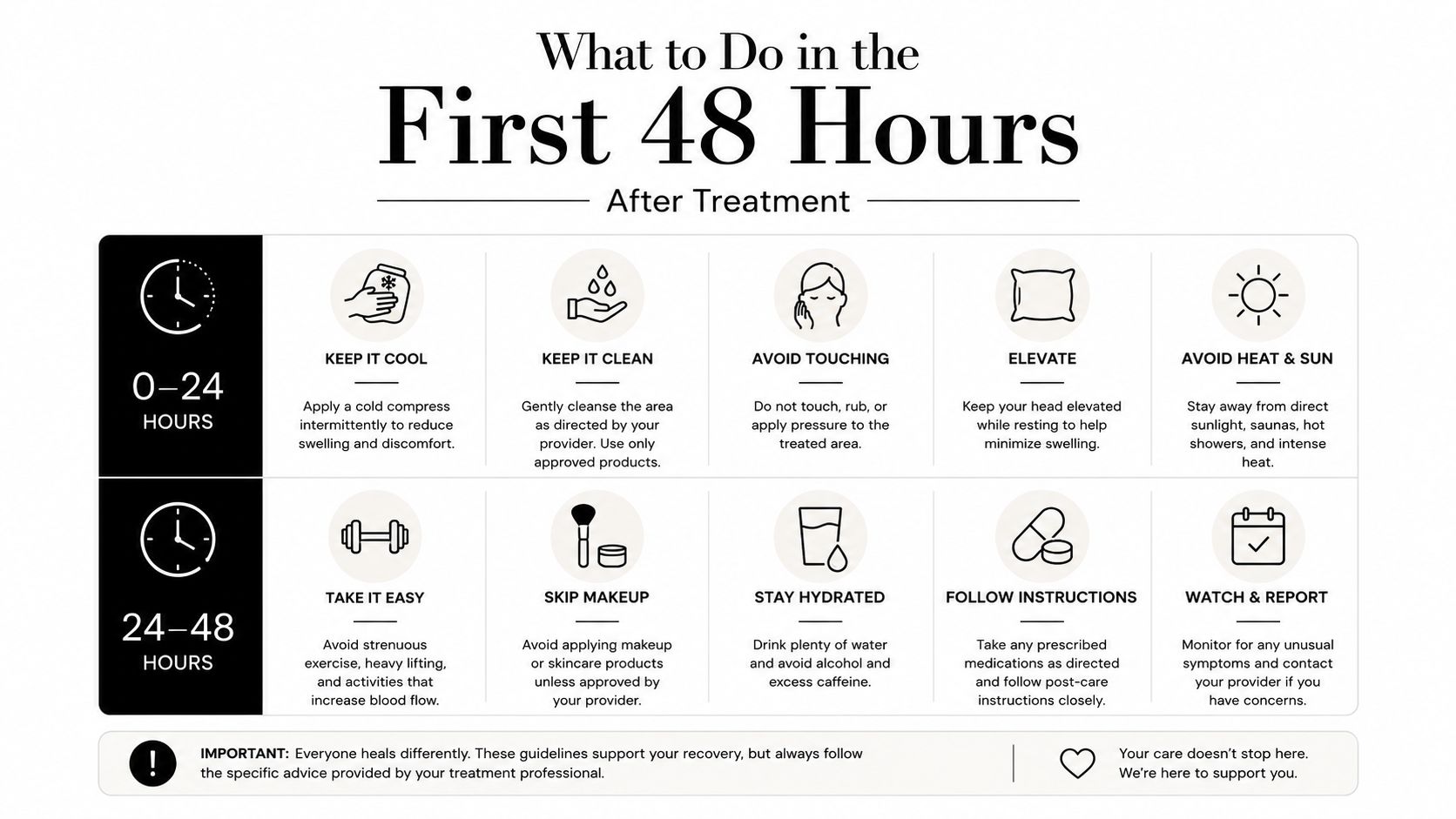
- What to Do in the First 48 Hours After Treatment
- Documents and Forms You Need to Submit
- Timelines and How to Track Your Claim
- Why Claims Get Denied Even With Correct Paperwork
- Filing a Claim From Abroad or in a Network Emergency
- How Bsure Helps When the Claim Stalls
Two Paths for Filing a Health Insurance Claim
Every claim starts with one decision: did the insurer pay the clinic directly, or did you pay the clinic yourself? In Spain, these are usually called cashless or direct billing, and reimbursement.
With cashless treatment, you normally use an approved provider or hospital. Before treatment, the clinic or you may need to contact the insurer's authorisation team. The insurer confirms that the facility, service, and policy are eligible, then settles the approved amount directly with the provider. You may still owe a copay or an excluded charge, but you won't usually pay the full medical bill upfront.
With reimbursement, you pay the provider first and request repayment from the insurer. This route is common when you use an out-of-network doctor, obtain treatment abroad, attend a clinic that doesn't offer direct billing, or hold a policy designed around free provider choice. Your immediate priority is proof of payment, while the insurer's priority is evidence that the service was covered and medically justified.
Find your route before treatment
Ask the insurer or broker four questions before agreeing to non-urgent care:
- Is the provider inside my policy network?
- Does this treatment require prior authorisation or a referral?
- Will the clinic bill you directly, or must I claim reimbursement?
- Which documents and submission channel do you require?
A network check isn't a formality. The public evidence on ACA marketplace plans in the United States shows why filing accuracy and network status matter. Insurers reported receiving 496 million claims in 2024, with about 19% of in-network claims denied, approximately 85 million claims, while out-of-network claims were denied at 37%. Those figures concern U.S. marketplace plans, not Spanish private policies, but they illustrate the broader risk of assuming that treatment and payment are automatically connected. KFF's analysis of claims denials and appeals provides the underlying context.
| Aspect | Cashless / Direct Billing | Reimbursement |
|---|---|---|
| Who pays first | The insurer pays the approved amount to the provider | You pay the provider |
| Main early check | Network status and pre-authorisation | Coverage, documentation, and payment proof |
| Your cash exposure | Usually limited to copayments or excluded items | You carry the full bill until repayment |
| Typical evidence | Authorisation number and provider invoice | Claim form, medical report, itemised invoice, and receipt |
| Main risk | Treatment proceeds without required approval | The insurer can't match the bill to eligible care |
If you're unsure which column describes your case, stop before treatment when possible and call the assistance number on your insurance card. A short confirmation recorded against your policy can be more useful than reassurance from a clinic receptionist.
What to Do in the First 48 Hours After Treatment
The first two days after treatment are when you can still correct most evidence gaps without chasing a clinic weeks later. Before leaving, photograph every page of the informe médico, every page of the factura, your prescription, and any authorisation message. Include the clinic's name and the date in your file name so you can identify the documents later.
Ask for a desglose, not a single-line receipt. “Medical consultation” may be accurate, but it doesn't tell the insurer whether the invoice includes a test, medication administration, imaging, or follow-up service. Each charge should be identifiable and capable of being matched to the doctor's report.
Check the report before the clinic closes
Look for the doctor's full name, collegiate number, specialty, signature, and stamp. The report should state why you attended, the diagnosis, what treatment was provided, and any tests or referrals prescribed. If a follow-up scan or specialist appointment is clinically necessary, ask the doctor to include it in writing rather than relying on a verbal instruction.
The invoice should identify you correctly. Missing or inaccurate claim data is a persistent administrative problem. In 2025, independent U.S. provider-side data identified missing or inaccurate claim data as the leading denial reason at 50%, with authorisation issues at 35% and incomplete or incorrect patient registration data at 32%. Experian's State of Claims 2025 documents those categories. The lesson for an expat in Spain is practical: check the patient name, NIE, policy number, treatment date, and provider details before submission.
Spanish clinic shortcuts can create avoidable returns. An unsigned report, an invoice without your NIE, or several services bundled into one unexplained line makes the insurer's review harder. Don't assume the clinic will correct the file later without prompting.
Even if you used cashless care, notify the insurer's assistance line after treatment when the circumstances were unusual, urgent, or disputed. Record the date, the representative's name, and the reference number. That call history can support your position if the provider later sends a balance or the insurer questions how the treatment was authorised.
Documents and Forms You Need to Submit
At minimum, your submission needs five items: the claim form, itemised invoice, medical report, payment proof, and authorisation reference. Gather these before uploading anything. If one item does not apply, record why rather than leaving the insurer to guess.
Use the insurer's parte de siniestros, reimbursement form, or digital claim form. Add the policyholder declaration if requested, then follow the portal's file order. For mobile uploads, photograph each page in good light and check that names, dates, signatures, and totals are readable. A blurred page can delay a valid claim.
Build the Spanish invoice correctly
A compliant factura should normally show:
- Provider identity: Legal name, address, and tax details, including the provider's NIF.
- Patient identity: Your full name and NIE, matching the insurance record.
- Service date: The actual date or dates of treatment.
- Itemisation: Each service, quantity, and unit cost rather than one unexplained total.
- Payment evidence: A card slip, bank confirmation, or invoice marked as paid.
- Clinical connection: Enough description to match the charge with the medical report.
Ask the clinic to correct errors before submission. The invoice should match the informe médico, which should state the diagnosis, treatment dates, treating physician's name, collegiate number, signature, and stamp. Where the provider uses clinical coding, include the relevant ICD-10 code. The report should also explain why the treatment was required. Payment proof confirms that you paid, not that the policy covers the care.
Keep originals and preserve the chronology when several providers are involved. The guidance on organizing medical records for injury cases offers a useful record-keeping method that also works for insurance files.
Check the insurer's submission rules
Requirements differ between Spain-active providers such as Sanitas, Adeslas, DKV, and Mapfre, and international insurers including Cigna, Bupa, and Allianz Care. Some accept clear PDF uploads, while others request original documents or specific forms. The policy may require documents in Spanish or English, with translation only if the insurer asks for it.
For the reimbursement route, consult the Bsure guide to health insurance reimbursement, then verify the checklist in your policy and claim portal. Online guidance cannot replace the requirements attached to your plan.
Your final bundle may include a signed claim form, itemised invoice with NIF and NIE, signed medical report with diagnosis and treatment date, proof of payment, prescription, authorisation reference, and bank details. An omitted authorisation number or payment record can cause an automatic return, even where the treatment qualifies. Save the submission receipt and a copy of the complete file outside the portal.
Timelines and How to Track Your Claim
You submit the claim on Monday and receive an upload confirmation. From there, the insurer's process has its own clock. The legal deadline for filing is separate from the practical time required to review a complete file. For uncomplicated reimbursement, many Spanish private insurers quote 5 to 15 working days, usually counted from the moment the claim is registered in their system, not from the day you post the documents.
By Tuesday, confirm that the submission created a claim reference. A digital receipt, registered-post acknowledgement, or timestamped email from your broker proves when the file was sent. A screenshot shows that you completed an upload, but a confirmation with the claim number gives you stronger evidence if the insurer later says the file was never logged.
During the first week, check whether the claim is marked complete. If the portal shows “pending,” or no status appears, contact claims support and ask whether any document is outstanding. Keep the question narrow. “Is the file registered as complete, or is a document missing?” is more useful than recounting the entire treatment.
By the second week, the insurer should either be reviewing the file or requesting clarification within its stated processing period. Record each call, email, request, and response, including the date and the person who handled it. This record matters when a claim changes hands between departments.
Around the quoted decision window, ask for a written explanation if reimbursement has not been approved or declined. Three weeks without acknowledgement warrants direct follow-up. Quote the submission evidence, provide the claim reference, and ask the handler to confirm the current status and the next required action.
If ordinary claims contact does not resolve the delay, request the claims manager. For a Spanish insurer, the next formal route may be the Defensor del Asegurado, depending on the company's complaints procedure. International carriers generally provide an equivalent complaints channel. Expats using Sanitas can review this guide to navigating Sanitas authorisations to understand why written authorisation records can affect the claim before it reaches escalation.
Why Claims Get Denied Even With Correct Paperwork
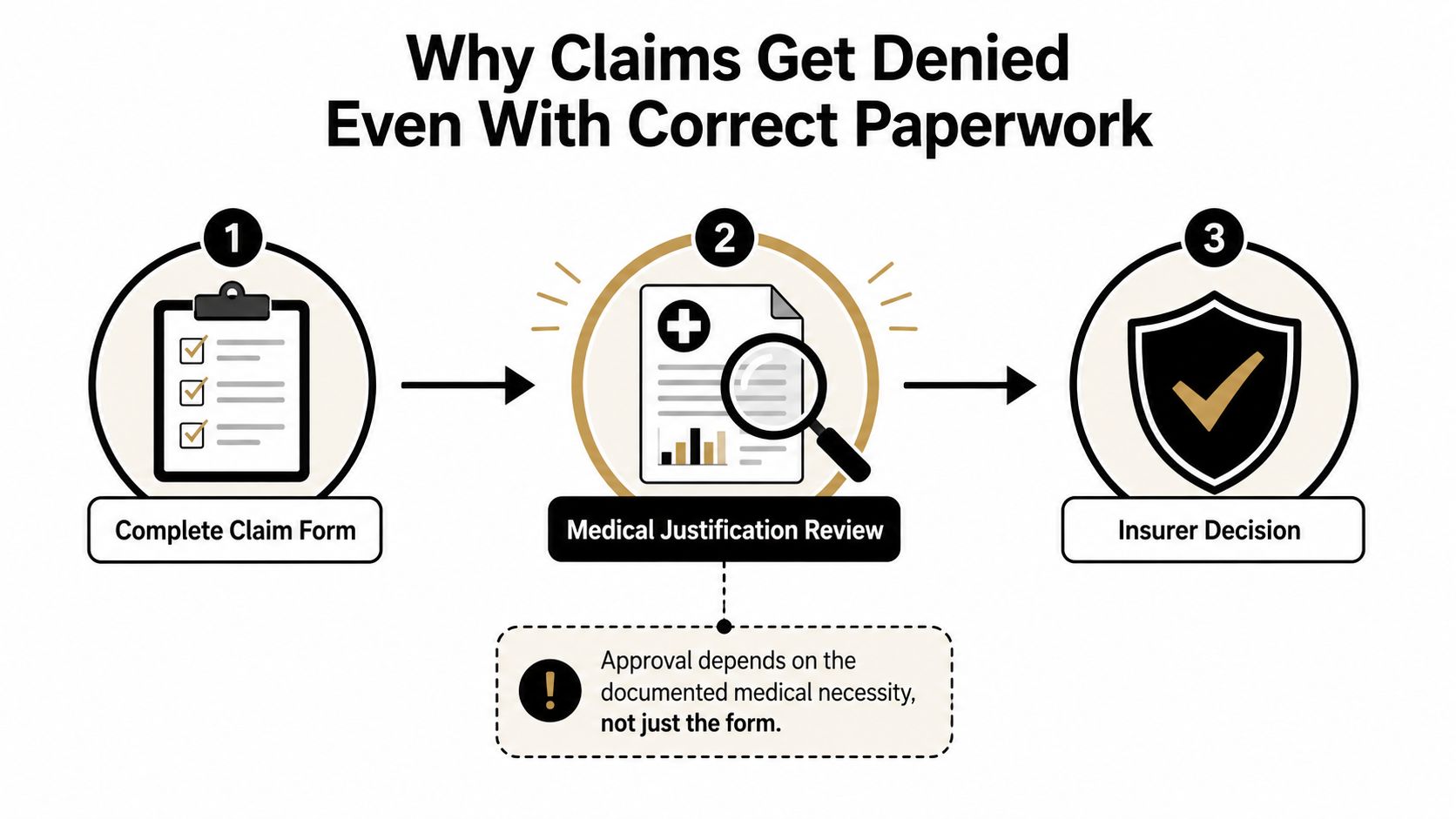
A completed form is necessary, but it isn't sufficient. The insurer still has to decide whether the policy covers the condition, whether the treatment was medically justified, whether the provider followed authorisation rules, and whether any limits or exclusions apply.
The key test is the medical justification chain. Does the doctor's report connect the symptoms to a diagnosis? Does the diagnosis match a benefit in the policy? Does the invoice describe services that correspond with the report? If any link is vague, the reviewer may return or deny the claim without disputing that you attended the clinic.
The denial reasons expats miss
- Pre-existing conditions: An exclusion or underwriting condition may apply even though the consultation itself appears routine.
- Cosmetic classification: A procedure you regard as reconstructive may be classified as cosmetic unless the clinical report explains the medical purpose.
- Unwritten authorisation: A phone conversation may have produced verbal approval, but the claim becomes harder to defend without a written reference.
- Exhausted benefits: An earlier claim may have used a yearly limit or sub-limit that you didn't realise applied to the later treatment.
- Uncovered services: The policy may exclude a service or cover it only under a different benefit category.
Public U.S. marketplace data shows that denial reasons can be difficult for consumers to interpret. In HealthCare.gov plans, KFF reported that 16% of limited public in-network denial data involved excluded services, 9% involved lack of prior authorisation or referral, and 6% involved medical necessity. KFF's review of denial reasons relates to U.S. plans, but the categories offer a useful framework for checking a Spanish policy. Provider-side data also identified authorisations as 35% of denials and services not covered as 23%, reinforcing why eligibility evidence matters. The AHA's discussion of payer denial tactics provides that broader context.
Audit the wording before you submit
Read the exclusions page, the prior authorisation schedule, and the sub-limit tables. Search the policy for the exact treatment name, related diagnostic terms, and phrases such as “medically necessary,” “pre-existing,” “reconstructive,” and “referral.”
If the insurer denies the claim, request a written explanation that identifies the policy clause and the missing or disputed evidence. Spanish insurers may offer a 30-day internal appeal window, but your policy and denial notice control, so check the stated deadline rather than assuming it. An appeal is stronger when a treating doctor responds directly to the denial reason, corrects the clinical coding if needed, and explains why the treatment was appropriate.
A complete invoice can therefore fail while a better-supported file succeeds. The practical defence is not a longer cover letter. It's a precise report, correct coding, written authorisation evidence, and a clear response to the clause the insurer relied on.
Filing a Claim From Abroad or in a Network Emergency
The assistance number on the back of your policy card is the first call in a serious emergency abroad. It's usually also listed in the welcome pack or insurer application. Have your policy number, location, nature of the emergency, and facility name ready, even if you're calling from a hospital reception desk.
The insurer may arrange a guarantee of payment with the facility, agree another direct-payment method, or instruct you to pay and claim reimbursement later. Don't assume the most convenient option is automatically available. Ask which route applies and request the instructions in writing if the situation allows.
Preserve cross-border evidence
Keep the local invoice, proof of payment, medical report, prescriptions, discharge documents, and proof of travel dates. An invoice in the local language may be acceptable, but obtain a certified translation only if the insurer requests it or the policy requires it. Translation costs can themselves be treated differently, so ask before commissioning a formal translation.
The treating doctor abroad won't necessarily use your insurer's preferred format. Request a report that states the diagnosis, treatment date, clinical reason, services provided, and follow-up advice. Ask the assistance team whether a specific medical certificate is required before you leave the facility.
For cover designed to remain useful when you move between countries, review the practical considerations in this guide to portable health insurance. Portability doesn't remove the need to follow notification and authorisation rules.
When the nearest suitable facility is out of network
An emergency may leave you with no realistic in-network option. The important evidence is why the nearest appropriate facility was unavailable, too far away, or clinically unsuitable. Call the insurer as soon as you can, explain the circumstances, and ask for retrospective network authorisation.
Write down the call reference and send a follow-up email summarising what was agreed. If the insurer later treats the visit as out of network, your contemporaneous record can support the argument that the facility was selected because of the emergency, not preference.
A clean claim form won't repair missing emergency notification evidence. In urgent care, protect your health first, then create the record as soon as practical.
How Bsure Helps When the Claim Stalls
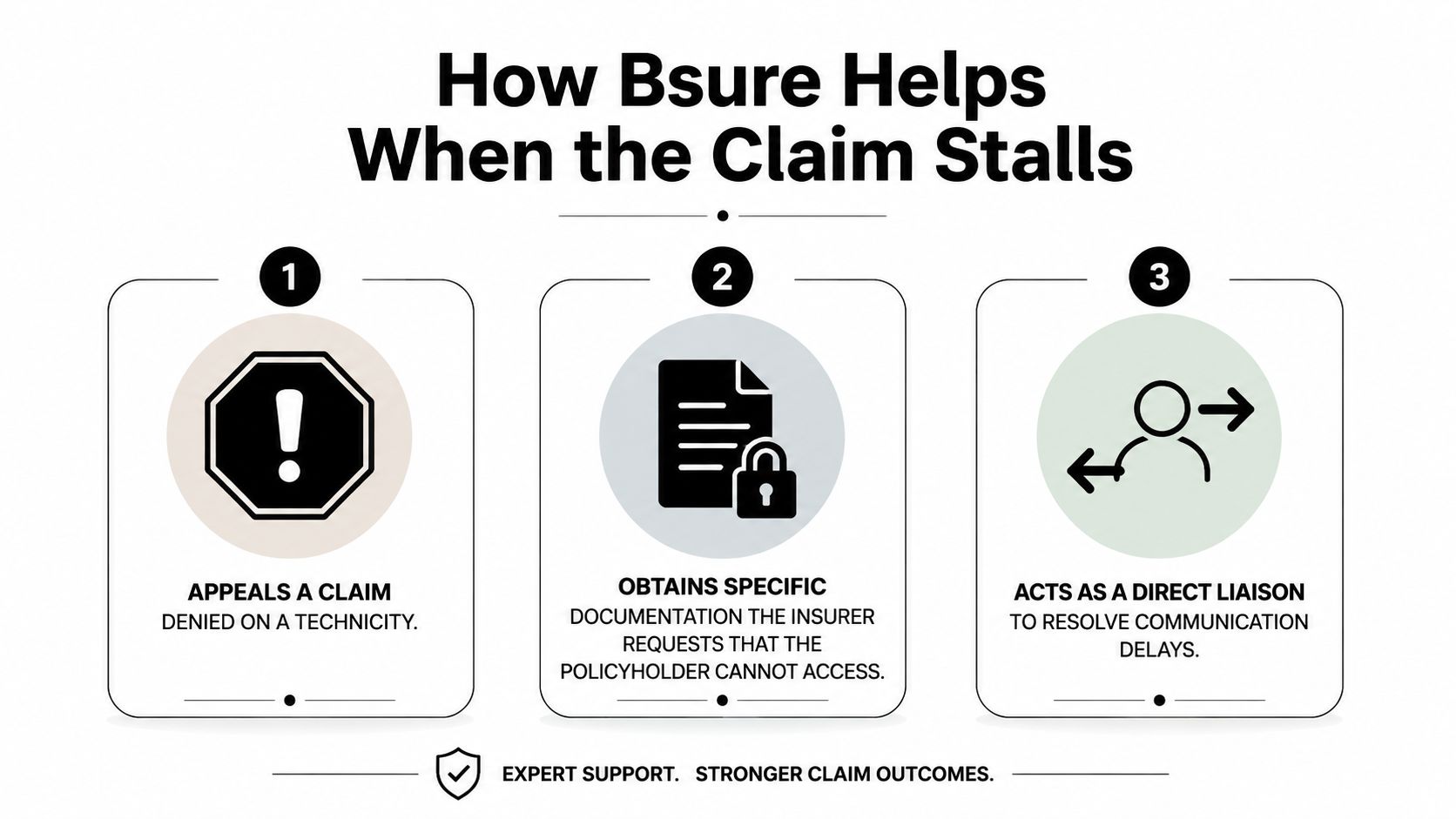
A broker becomes useful at a specific point, not as a substitute for reading the policy. If a claim is technically denied, if the insurer asks for a document you can't obtain easily, or if a pre-authorisation step was missed, the problem becomes one of procedural intervention.
The broker can identify what the insurer is asking for, distinguish a missing document from a coverage dispute, and help present the evidence in the format the claims team expects. That distinction matters. A call centre representative may explain the general process, but may not be able to interpret clinical coding, contact the underwriting team, or coordinate a formal reconsideration.
Where intervention changes the file
A technical denial often needs corrected evidence rather than an argument. For example, a dental prosthesis claim may be rejected because the provider used a code the insurer doesn't recognise under the relevant benefit. A broker can ask the dentist for the correct prosthetic coding and submit a formal reconsideration that links the code to the policy benefit.
An inaccessible document creates a different problem. The insurer may request a clinical report held by a hospital department, or a coding detail that the patient can't interpret. The broker can contact the provider, request the required report or coding, and check that the replacement document answers the insurer's question rather than repeating the original wording.
A missed authorisation requires careful handling. The broker can review the policy schedule, establish whether an emergency exception or retrospective approval may apply, and present the communication record to the insurer. That doesn't guarantee payment, but it turns an undocumented conversation into a documented request for review.
A communication delay can be just as damaging as a missing receipt. A broker who has direct contacts with an insurer's claims or underwriting teams may be able to route the matter beyond general customer service. Correspondence in Spanish legal or insurance language can also be translated and summarised so you don't accidentally miss a deadline or answer the wrong question.
In a stalled hospital claim, a report reissued in the insurer's required format may resolve the problem faster than repeated calls asking whether the original file has been reviewed. The useful work happens in the handoff between the clinic, the claims department, and the policy wording.
Practical rule: Ask the insurer to identify the exact clause, code, or document that caused the decision. Don't respond to a vague denial with a vague bundle.
Run this final quality check
Before uploading or posting your documents, confirm:
- Invoice identity: The provider's full tax identification details, including NIF, appear on the invoice.
- Line-item detail: Each service has a clear description and cost.
- Medical report: The report is signed and stamped, with the diagnosis, treatment date, doctor's name, and collegiate number.
- Policy period: The dates of service fall within the active cover period.
- Authorisation evidence: The required pre-authorisation number is shown on the form, invoice, or covering note.
- Payment proof: The insurer can see that you paid the provider where reimbursement applies.
- Personal details: Your name, NIE, policy number, and bank details match the insurer's records.
- Independent archive: You've saved every document and email outside the insurer's portal.
Photograph every page on the day of treatment. Don't rely on the clinic to send documents directly, even when staff say they will. Ask for the file yourself and keep the original invoices. If the policy requires reimbursement in a particular currency, check that the invoice and payment evidence can be reconciled with that requirement.
A one-page claim summary can make the bundle easier to review. State the treatment date, provider, diagnosis, amount paid, authorisation reference, documents enclosed, and the action you want from the insurer. Keep it factual and brief.
When a claim exceeds the insurer's stated response time, send a written follow-up rather than waiting passively. Include the claim number, confirmed submission date, missing response, and a clear request for either a decision or a list of outstanding documents.
Bsure Health Brokers offers policy comparison and ongoing claims guidance for expats in Spain, including help with authorisations, insurer correspondence, and reimbursement paperwork. If you want support before a documentation gap becomes a denial, visit Bsure Health Brokers and discuss your policy and claim route with the team.